

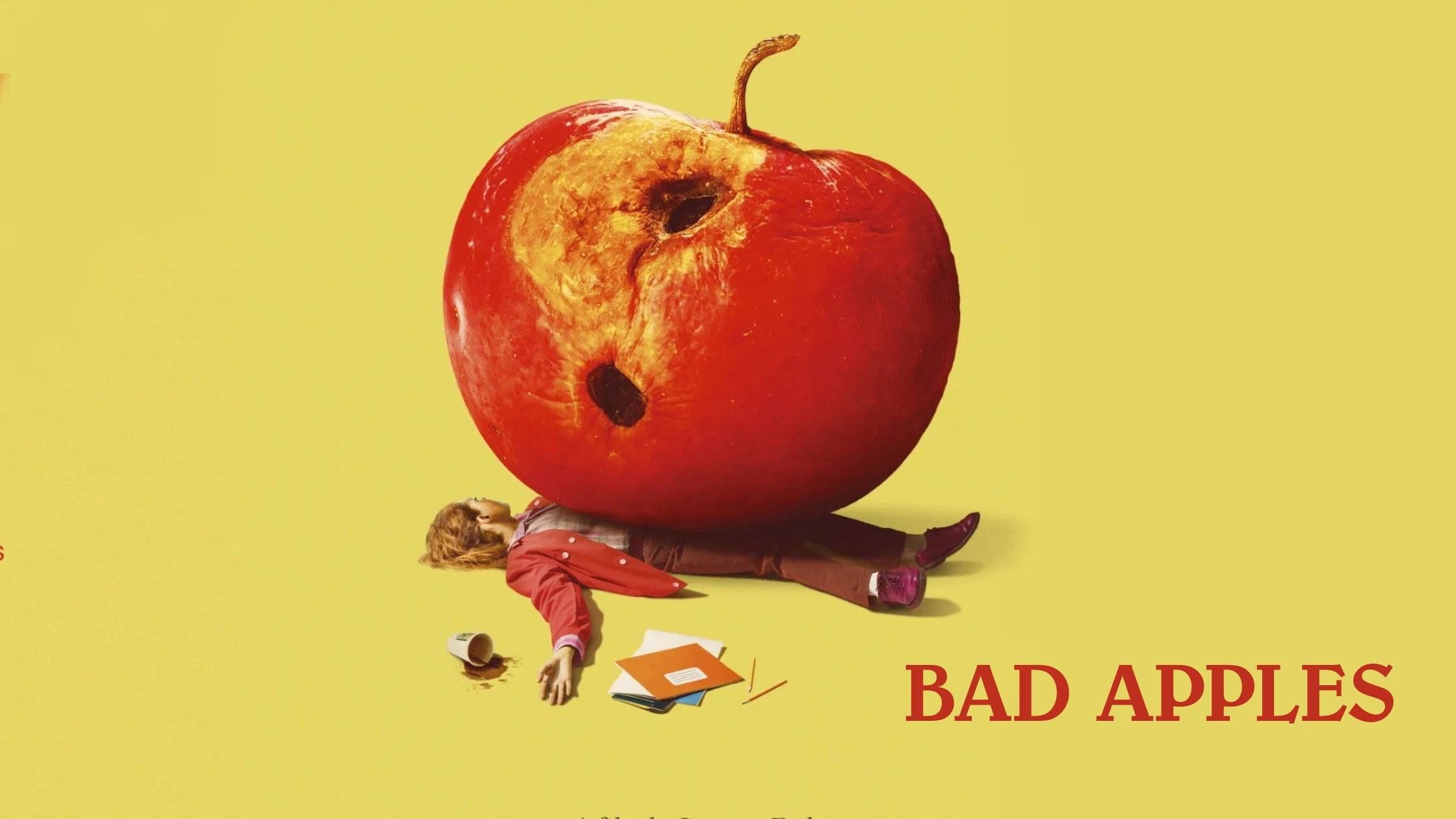
Bad Apples — a sharp, darkly comic schoolroom satire.
There’s a certain deliciously wicked subgenre of cinema that finds its bite in small, domestic worlds — classrooms, suburbia, workplaces — and then lets tension, satire, and moral panic bloom until you can’t tell whether you’re meant to laugh or look away. Bad Apples (2025) sits squarely in that tradition: a black comedy / thriller about a teacher pushed to the brink by one particularly disruptive pupil, and the moral unraveling that follows. It premiered at the 2025 Toronto International Film Festival and has been discussed as a dark, satirical look at modern schools, teacher burnout, and what people are willing to do when systems fail them.
Quick facts — director, source, premiere, tone.
Director: Jonatan Etzler (English-language debut).
Screenplay: Jess O’Kane, based on Rasmus Lindgren’s novel De Oönskade (The Unwanted).
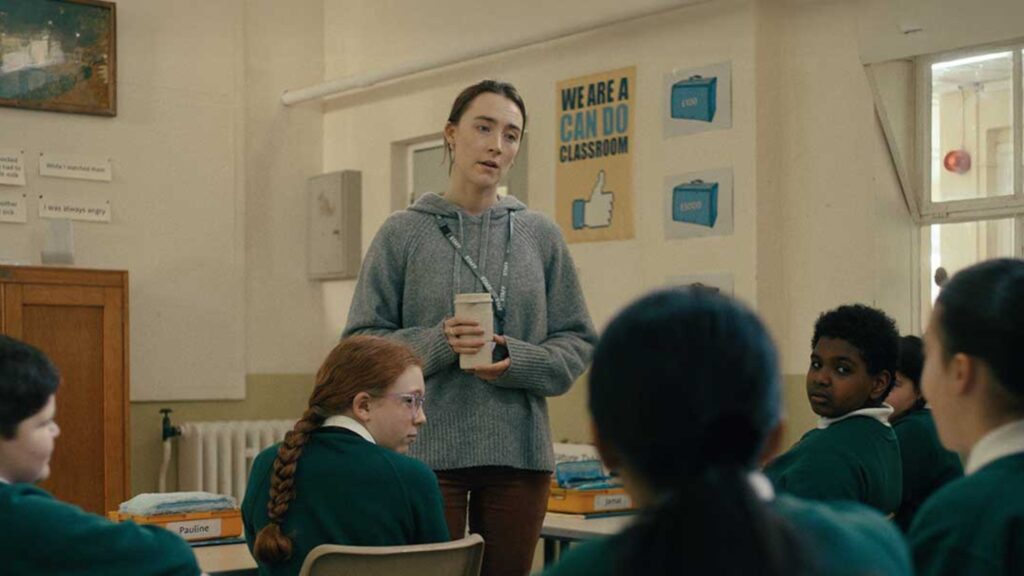
Star: Saoirse Ronan as Maria, a primary school teacher whose life is overturned by one unruly pupil.
Premiere: Toronto International Film Festival, September 2025.
Tone / genre: dark comedy / satirical thriller — funny, unnerving, and morally ambiguous.
Cast — how many, and who are the principals?
If you mean the principal, credited ensemble: Bad Apples is carried by a lean, strong cast. The main credited players include Saoirse Ronan (Maria), Eddie Waller (Danny — the unruly pupil), Jacob Anderson, Rakie Ayola, Robert Emms, Sean Gilder, and Kerry Howard, among others. The production’s festival and database listings show a compact roster — the story is narrowly focused, so the core speaking cast is roughly 7–12 actors, with additional small roles and extras filling out the school and town world. For a full roll call, the film’s IMDb and festival pages list all credited names.
Who’s the main (means) character?
Although the unsettling student is a major catalyst, this is Maria (Saoirse Ronan)’s film. She is the emotional and narrative axis: a dedicated teacher slowly crushed by stress, bureaucratic indifference, and one particularly disruptive child whose presence escalates into something much darker. The plot follows Maria’s perspective — her frustrations, small acts of rebellion, and the increasingly serious choices she makes. That’s not to say other characters (the pupil Danny, the administration, or Maria’s peers) aren’t crucial — they are — but Maria remains the “means character” through which we experience the film’s ethical shifts.
Box office / “box collection” — what it made.
As of the film’s festival premiere and early coverage, Bad Apples was still in its festival / pre-release window; wide theatrical grosses were not yet publicly reported. The movie has been making the rounds on the festival circuit (TIFF coverage and critical reviews) and is positioned as a specialty title — which means any box-office picture will likely depend on distribution deals and release strategy. In short: no definitive box-office totals are publicly available yet; the film’s commercial trajectory will become clear once distribution and theatrical dates are announced and tracked.
The niche — who should see this movie?
Bad Apples fits a distinct niche: adult viewers who appreciate dark satire with an idea at its center — not a whodunit or a slasher, but a moral fable couched in a school setting. Its likely audiences:
- Cinephiles and festival crowds who enjoy provocative, conversation-starting movies.
- Viewers interested in social satire that interrogates institutions (education, bureaucracy) through personal crisis.
- Fans of performance-led dramas — Saoirse Ronan’s central turn is the reason to watch.
- Anyone who liked films such as Bad Education, We Need to Talk About Kevin, or The Bad Seed — i.e., movies that make the classroom or child a site of existential discomfort.
It’s not a mass-market comedy or a family film; it’s a blackly comic art-thriller that courts discomfort on purpose.
Deep dive — plot, themes, performances, style (no major spoilers).
The set-up
At first glance the premise is deliciously simple: Maria, a committed primary school teacher, has her life and classroom repeatedly disrupted by Danny, a ten-year-old who’s volatile, sometimes violent, and immune to standard disciplinary options. The school bureaucracy is underfunded, parental responses are fraught, and Maria’s own mental load is heavy. One day, Danny “goes away” — and strangely, life in the classroom improves. That improvement, and Maria’s choices around Danny’s disappearance, form the core moral engine of the film. The story toys with the audience’s complicity: did Maria do something? Did the system? And once the immediate problem is solved, what are the consequences?\
Themes
- Teacher burnout and institutional failure. The film is a hot mirror for the pressures teachers face: crowded classrooms, underfunding, and the emotional labor that rarely gets noticed. Bad Apples turns that pressure into a moral experiment: when bureaucracy fails, what will a desperate person do?
- Moral ambiguity and vigilantism. The narrative asks whether an ostensibly good act (removing a toxic influence) can ever be justified if achieved by immoral means — and whether improving many lives excuses harming one. The film never gives easy answers.
- Satire of social complacency. It’s also a satire: parents, administrators, and communities are shown as quick to lecture but slow to act; the film uses black humor to expose systemic cowardice.
Performances
Saoirse Ronan anchors the movie. Early reviews emphasize how she walks a tightrope — making Maria sympathetic even as her actions become harder to rationalize. Critics suggest Ronan’s performance is the film’s moral compass: subtle, interior, and full of small inflections that keep viewers invested even when the story pushes them toward discomfort. Eddie Waller (Danny) is reportedly a revelatory presence — unnerving and unpredictable in a way that refuses simplification. Supporting performances (school staff, parents) populate the world with believable, sometimes cringe-worthy realism.
Direction, tone, and style
Jonatan Etzler reportedly leans into a restrained, surgical style. The film’s humor is black rather than broad; its shocks are moral more than visceral. Pacing favors mounting unease: small classroom moments, measured long takes, and then sudden ethical jolts. Critics noted that the film sits uneasily between satire and social commentary — occasionally unsure whether to wink or to indict — but that tension itself is part of the experience.
Notable scenes & what they do
There are a few sequences reviewers highlight (without spoiling): a classroom scene where disciplined order gives way to tragicomic liberation; a PTA meeting that reads as a grotesque parody of adult performative concern; and a late sequence in which the broader ramifications of Maria’s choices ripple outward. Each scene is designed to force the viewer to recalibrate their moral stance — to ask, repeatedly, whether they’d have done the same.
Strengths and weaknesses.
Strengths :
- Central performance. Saoirse Ronan gives the Bad Apples film its gravity and moral complexity. Critics single her out as the reason the story works.
- Topical bite. The movie taps into contemporary anxieties about schooling, safety, and institutional failure, making it feel urgent.
- Sharp tonal control. When it lands, the film is wickedly funny and deeply unsettling — a hard balance that many films attempt and few achieve.
Weaknesses / caveats :
- Ambivalent stance. Some critics say the Bad Apples film wavers between satire and social critique, never quite committing to the full radical potential of either stance; that might frustrate viewers expecting a clearer moral or political argument.
- Not for everyone. The subject matter and moral ambiguity will be unsettling for many — not a film to watch with children or if you want neat answers.
Reception so far.
Early festival reviews have been largely positive about the performances and the film’s sting, while noting its provocations. Rotten Tomatoes and festival write-ups suggest critics are responding well, calling it a darkly comic but thoughtful piece that pushes buttons rather than placates audiences. (Aggregators and full critic scores are evolving as festival reviews continue to appear.)
Final take.
Bad Apples is a small, sharp film that trades in moral complexity: it wants to make you feel complicit and then to watch how you try to justify what you just watched. It won’t provide comfort; it intends to unsettle. If you’re up for a provocative, performance-driven film that interrogates teachers’ limits, institutional failures, and the slippery ethics of “the greater good,” put this on your festival-watch list. It’s the kind of film that will lodge in conversation long after the credits roll — exactly the point of good satire.