


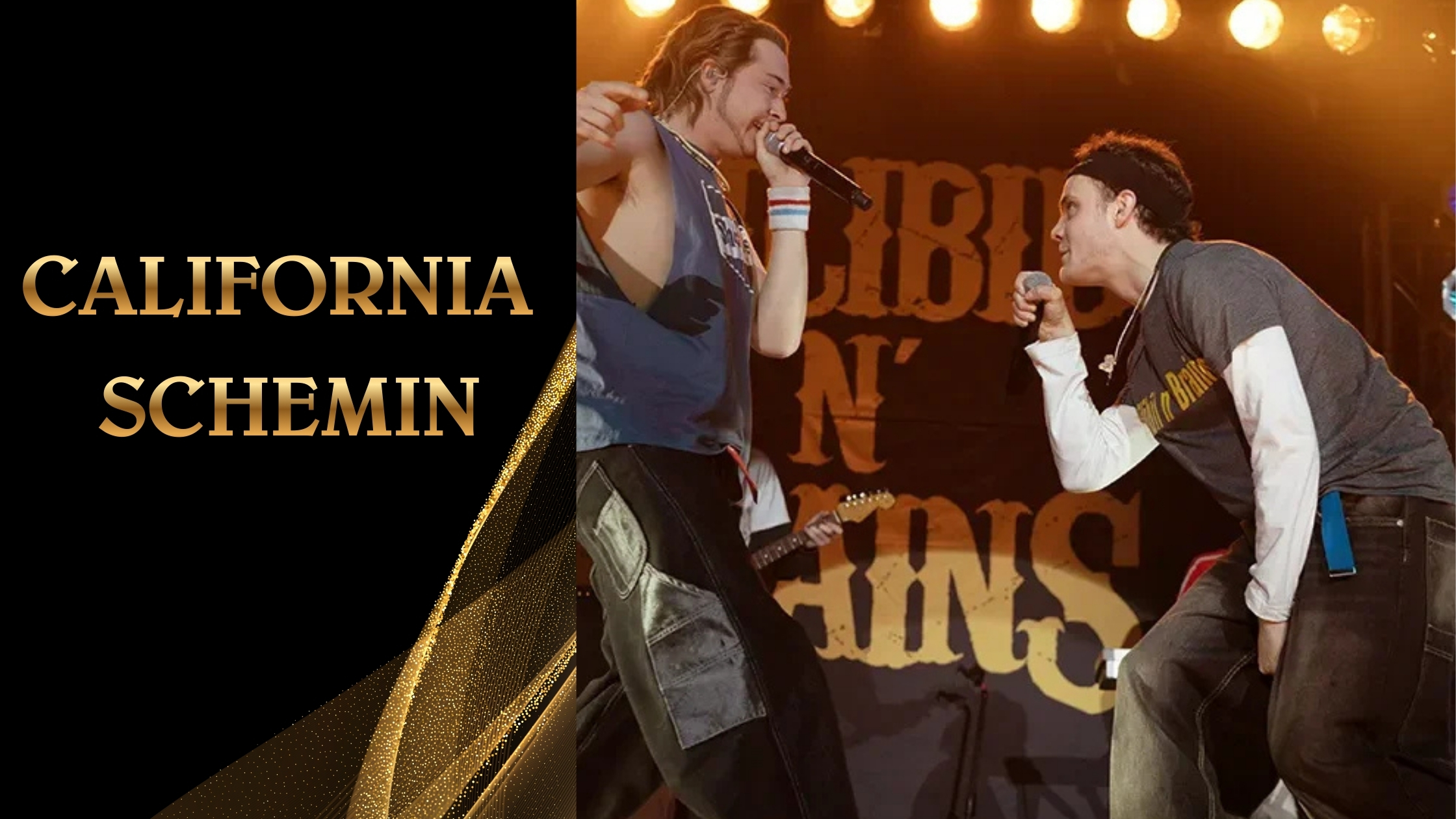
California Schemin’ — A True Scottish Hustle Told with Heart.
California Schemin’ (2025) marks the directorial debut of James McAvoy, and it’s a biographical musical-drama about ambition, identity, and the audacious hustle of two Scottish rappers who pretended to be Californians to break into the music business. The film is rooted in real events — based on the autobiography of Gavin Bain — and tells the story of Silibil N’ Brains, the rap duo from Dundee who conned the record industry by reinventing themselves as American.
The tale is at once funny, touching, and bittersweet — a dreamer’s story, a con game, and a portrait of friendship under pressure. McAvoy balances the energy of a musical biopic with real emotional grounding, making California Schemin’ both entertaining and meaningful.
Cast — How Many, and Who’s In It.
Principal / Key Cast:
- Séamus McLean Ross as Gavin Bain (one half of the duo).
- Samuel Bottomley as Billy Boyd (the other half of the duo).
- James McAvoy, in addition to directing, plays a supporting role as Anthony Reid (a record executive).
- James Corden appears as a Music Executive.
- Amber Anderson plays Amy.
- Lucy Halliday as Mary Boyd (Billy Boyd’s partner) per casting sources.
- Rebekah Murrell as Tessa.
- David Witts, Sonny Poon Tip, and others in supporting roles.
In total, the cast is fairly focused — centered around six to eight main characters, plus a few supporting ones. Because the story is tightly about the duo’s rise, much of the screen time is devoted to Gavin and Billy, with McAvoy and his supporting cast providing context, conflict, and the industry side of things.
Who Is the “Main” (Means) Character?
While California Schemin’ is very much a duo story, the film leans slightly more on Gavin Bain (played by Séamus McLean Ross) as its emotional and ideological heart. Gavin is the more idealistic and driven of the two, the one who pushes hardest for the California persona and believes deeply in the validity of their music. His friendship with Billy is central, but Gavin’s internal conflict — between ambition, authenticity, and the lie they’re living — gives the narrative its emotional force.
That said, Billy Boyd (Samuel Bottomley) is equally important: his loyalty, his doubts, and his personal relationships (especially with Mary) ground the story. The film doesn’t privilege one over the other so much as use Gavin as a sort of moral compass, while Billy provides balance and a softer, more human counterpoint.
Box-Office / “Box Collection” — What It Made (or, What We Know So Far).
As of now, no widely reported box-office gross is publicly documented for California Schemin’. Here’s what’s known:
- The film premiered at the Toronto International Film Festival (TIFF) on 6 September 2025.
- It has secured distribution via StudioCanal in key markets, including the UK.
- Because it’s just now making its festival rounds, broad theatrical box-office numbers (domestic / global) are not yet published in major box-office tracking sources.
So, at this point, California Schemin’ is more of a festival / prestige musical biopic than a guaranteed blockbuster hit. Its future financial performance will depend on how widely it’s released, how much it resonates with audiences, and how well it travels in different markets.
The Niche — Who This Movie Is For.
California Schemin’ occupies a very compelling niche:
- Biographical Music Films: It belongs to the lineage of true-story music biopics, especially those about underdogs and hustlers (think 8 Mile, Straight Outta Compton, but with a twist).
- Underdog / Outsider Stories: It’s for audiences who root for dreamers, especially people from working-class or marginalized backgrounds aiming for something bigger.
- Cultural Identity & Reinvention: The film speaks to identity (Scottish vs. American), authenticity, and how far people are willing to go to be heard — it will appeal to viewers interested in cultural gatekeeping and the performance of identity.
- First-Time Directors & Actor-Directors: Those who follow actors-turned-directors may be particularly interested, as this is McAvoy’s directorial debut.
- Musical & Hip-Hop Lovers: Not just fans of rap, but people who like music told via film — especially the rising-struggle-fame arc.
In short, California Schemin’ is made for cinema lovers who believe in the power of hustle, fans of real-life stories, and viewers who want more than flash — they want heart + truth + ambition.

Deep Details: Story, Themes, Execution, Strengths & Challenges.
Plot & Narrative (Without Heavy Spoilers)
The film follows Gavin Bain and Billy Boyd — two young men from Dundee, Scotland — as they struggle to break into the UK rap scene in the early 2000s. They are talented, ambitious, and convinced that their local accents and Scottish identity might hold them back in a music industry that prizes image.
After repeated rejections and humiliation (most notably at a London audition), they hatch a wildly audacious plan: reinvent themselves as Silibil N’ Brains, a rap duo from California Schemin, complete with fake backstories, personas, and accents. Their deception works — they land a record deal, gain traction, and even open for big names — but as their fame rises, so does the pressure to maintain the lie.
Underneath the hustle, the film explores their friendship, the toll of living a double life, and how ambition corrodes or empowers. There are highs — performance, creativity, brotherhood — but also a reckoning when the fraud threatens to unravel. McAvoy uses their story not just for laughs or spectacle, but to examine the cost of authenticity, belonging, and the dream of being someone else.
Themes
- Identity & Authenticity
- The film presses on what “being Scottish” means in a global industry. Gavin and Billy’s decision to pretend to be Americans is not just a hustle: it’s a commentary on how identity is policed and what people believe will sell.
- Their lie becomes part of their identity, raising the question: is the person they created more “them” than the real selves they hide?
- Art vs. Performance
- Their rapping is real — they’re talented — but the performance of identity is part of the art. The film asks: is art devalued if the artist isn’t “real” in the way industry wants them to be?
- Friendship & Loyalty
- The bond between Gavin and Billy is deeply caring but complicated. As their scam grows, tensions build. The emotional cost of their dream tests their loyalty and forces them to consider whether they’re conning each other, too.
- Prejudice & Gatekeeping
- The film doesn’t shy away from how Scot voices are marginalized in the British music industry. That prejudice is part of what drives their scheme.
- It also critiques how industries value image and marketability, not just talent.
- Ambition & Consequence
- Their scam is seductive, but the consequences are real. As success grows, so does anxiety — about being exposed, about losing control, about what happens next when the con unravels.
Direction & Style
- James McAvoy’s debut: According to reviews, McAvoy brings energy, empathy, and a clear love for the source material.
- He balances upbeat musical sequences with quieter, character-focused moments — the first half of the film has montages, concert excitement, and youthful abandon; later, things darken as the lie becomes heavier.
- Critics note some tonal shifts: McAvoy manages to keep the film grounded even when the story risks sliding into cliché.
- Visually, the film captures both the gritty working-class origins in Scotland and the fantasy of “California” rap grandeur: you sense both the real struggle and the invented splendor.
Performances
- Séamus McLean Ross (Gavin): Ross delivers a passionate, charismatic performance. Gavin’s ambition and vulnerability are front and center, and Ross gives the character heart.
- Samuel Bottomley (Billy): Bottomley complements Ross beautifully — while Gavin dreams big, Billy grounds things. The contrast between them is emotionally effective.
- James McAvoy (Anthony Reid): In a supporting role, McAvoy brings his acting chops to the table, providing both comedic and dramatic support.
- Lucy Halliday (Mary Boyd) and Rebekah Murrell (Tessa): They add emotional depth, especially in scenes about loyalty, love, and the cost of the lie.
Strengths & Challenges
Strengths:
- Authentic Underdog Story: It’s a genuine David-vs-Goliath tale, rooted in a real story with real stakes.
- Heart + Humor: The film is not just a biopic; it’s funny, tender, and self-aware.
- Director’s Passion: McAvoy clearly cares about the story and its cultural context — his narrative feels personal and respectful.
- Strong Lead Duo: Ross and Bottomley make Gavin and Billy feel alive, flawed, and sympathetic.
- Relevant Themes: Identity, authenticity, and the music industry’s superficial gatekeeping feel timely.
Challenges:
- Predictable Arc: Some critics feel the film follows a fairly traditional biopic structure (rise, fall, reckoning).
- Tonal Consistency: The shift from hustle-comedy to more serious emotional beats might feel uneven to some viewers.
- Box-Office Risk: As a musical biopic about a niche (Scottish-American rap hoax), it may not immediately attract broad commercial audiences outside festival or specialty circuits.
Critical Reception.
- On Rotten Tomatoes, the film scores a 95% Tomatometer (as of the latest reviews), suggesting very strong critical support.
- On Metacritic, it holds a score of 66 (“Generally Favorable”) based on critic reviews.
- Collider praised McAvoy’s balance of ambition and empathy, calling the California Schemin film “confident, entertaining, and deeply personal.”
- The Guardian noted that while the plotting is familiar, the film shines in its sincerity and its compassion for dreamers and outsiders.
- Eye for Film observed that while the last act drags slightly, the performances and emotional core justify the journey.
Why California Schemin’ Matters.
- A Fresh Music Biopic: Rather than retell the life of an already famous rapper, this is the story of two working-class Scots with talent and a wild plan. It’s underdog, but also a con-artist story — a rare blend in music biopics.
- James McAvoy’s Growth: As an actor stepping into the director’s chair, McAvoy demonstrates he has both ambition and empathy. His personal connection to the story (working-class roots, outsider status) gives the film sincerity.
- Cultural Commentary: The film highlights prejudice (in how Scottish rap is perceived), the power of persona, and the industry’s gatekeeping. It’s not just about success — it’s about what the industry expects you to be.
- Friendship Under Pressure: Gavin and Billy’s bond is emotionally resonant. Their con is entertaining, but the heartbreak and complexity come when the lie strains their friendship.
- Identity & Belonging: By pretending to be Californians, these two men question what it means to be themselves in a world that won’t take them seriously otherwise.
Final Thoughts.
California Schemin’ is a warm, energetic, and surprisingly tender film about dreams, deception, and identity. James McAvoy crafts his first film with care, balancing the spectacle of musical ambition with the grit of working-class Scotland and the drama of friendship under strain.
The story of Gavin Bain and Billy Boyd (Silibil N’ Brains) is almost unbelievable — two friends pretending to be Americans to make it in rap — and McAvoy makes you feel both the absurdity and the urgency of that con. Ross and Bottomley bring heart to their roles; the film’s pace keeps things fun, even as it leans into real emotional stakes.
If you like music biopics, stories of outsider ambition, or films about the tension between who you are and who you think you must be, California Schemin’ is a must-watch. It’s not just a hustler’s tale. It’s a story about being seen, being heard, and taking a leap — even if it means lying your way there first.