


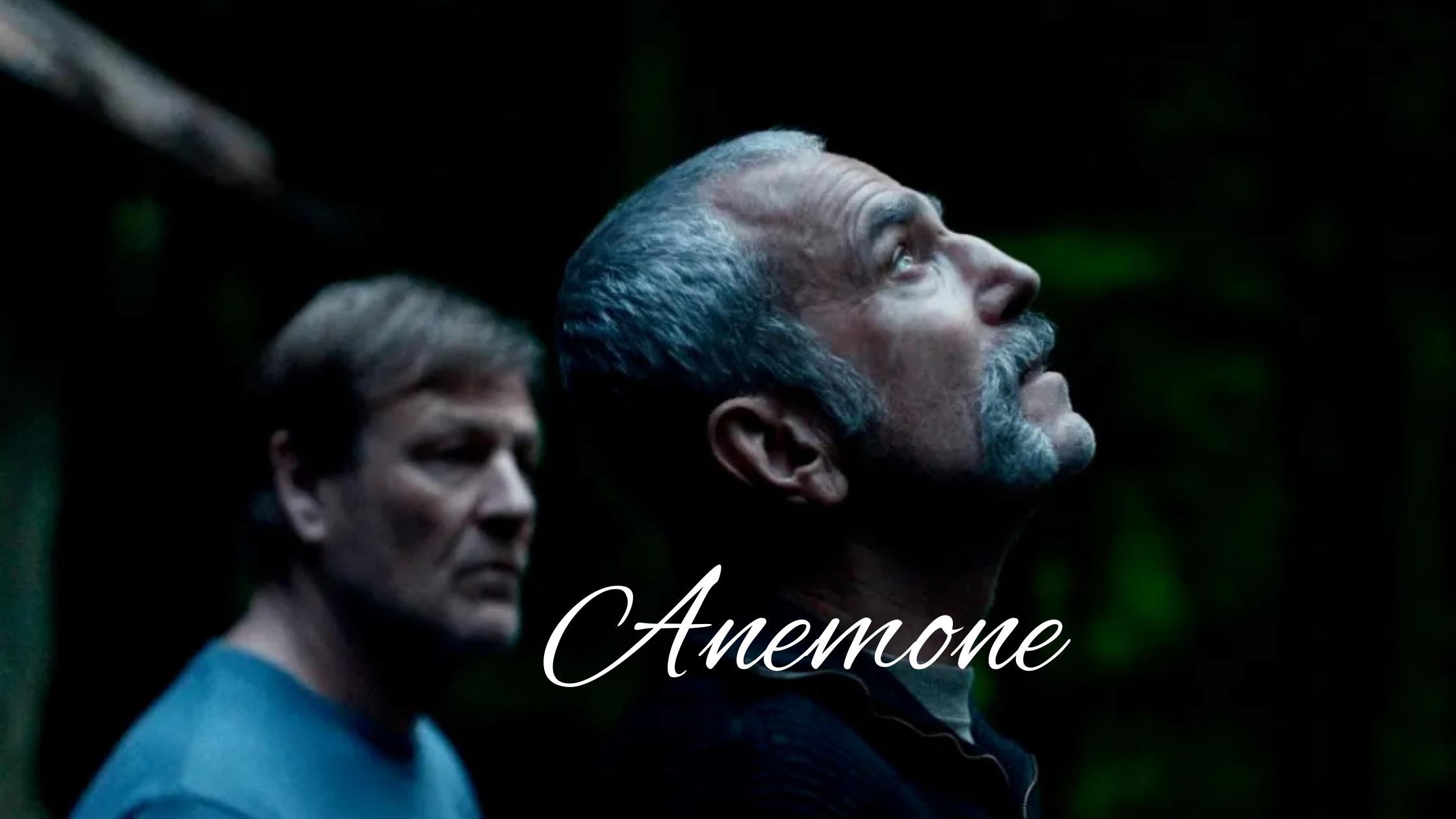
Anemone — Daniel Day-Lewis returns in a spare, haunted family drama.
There are comeback movies, and then there’s Anemone — the film that marked Daniel Day-Lewis’s unexpected return to acting after an eight-year retirement. Directed by his son Ronan Day-Lewis from a script the pair co-wrote, Anemone is a small, bitterly atmospheric drama about broken families, buried violence and the heavy echoes of the past. It premiered at the New York Film Festival in 2025 and then opened in limited release, where its art-house sensibility and star power produced a modest box-office showing and divided critics.
Below: a complete reader’s guide — how many people are in the cast (practically speaking), who the movie centers on, what it made at the box office so far, what niche it occupies, and a deep, spoiler-sensitive exploration of story, themes, style and performance.
Quick facts (need-to-know)
Title: Anemone (2025)
Director: Ronan Day-Lewis (feature debut) — co-written by Ronan and Daniel Day-Lewis.
Principal cast highlights: Daniel Day-Lewis, Sean Bean, Samantha Morton, Samuel Bottomley, Safia Oakley-Green.
World premiere: New York Film Festival, September 2025.
Runtime: ~126 minutes.
Distributor: Focus Features (US) / Universal (UK).
Reported U.S. box office (limited → expansion): ≈ $1.16M (domestic gross at time of reporting).
How many cast — practical answer.
If you mean principal or credited players who actually carry the narrative, Anemone has a deliberately compact ensemble: the story orbits roughly five to eight named performances that matter (Day-Lewis, Bean, Morton, Bottomley, Oakley-Green and a handful of supporting players). If you include every bit player, background actor and small town extra in the credits, the number runs larger — as is typical — but the movie is an intimate family drama rather than a sprawling crowd piece. The NYFF program and press materials list the principal five-to-seven credited names above as the core ensemble.
Who is the “means” character — whose story is this?
Anemone is a family film with mirrored centers: the camera spends time with both Ray Stoker (played by Daniel Day-Lewis) — the reclusive, haunted brother — and Jem Stoker (Sean Bean), whose decision to seek Ray out sets the plot in motion. If forced to pick a single “means” character — the person through whom the audience primarily feels the film’s moral and emotional gravity — it’s Ray: Day-Lewis’s return to the screen anchors the film, and his performance becomes the lens for the movie’s exploration of guilt, trauma and inherited violence. Yet the film intentionally distributes weight: Jem’s journey and the younger family members (including Samuel Bottomley’s Brian) make it generational rather than solo, so the story reads as a family chorus organized around Ray’s presence.
Box office / “box collection” — what it made.
Anemone is not a tentpole and it wasn’t expected to be one. Released in a limited art-house rollout and then expanded, the film’s early commercial return was modest: Box Office Mojo reports a domestic gross in the neighborhood of $1.16 million after opening in October 2025 (opening weekend ≈ $681k). That figure is consistent with the picture of an awards-season, prestige release that trades on performances and festival buzz rather than mass commercial appeal. Keep in mind that specialty films often earn most of their cultural currency through reviews, festival runs, and later streaming windows; box office alone doesn’t capture their afterlife.
The niche — who is this movie for?
Anemone sits squarely in the intimate, actor-driven prestige drama niche. Its primary audiences are:
- Cinephiles who prize performance and craft over plot mechanics (a movie made to be acted in as much as to be watched).
- Viewers who follow actor comebacks, especially historically resonant ones — Daniel Day-Lewis’s return is itself a major draw.
- Festival audiences and art-house patrons who prefer meditative, character-first films about family, masculinity and the political aftershocks of violence.
- Critics and awards voters (the film’s release pattern and distributor suggest an awards-season positioning).
It is emphatically not a popcorn thriller or a mainstream crowd-pleaser: expect a slow, sometimes elliptical story that rewards patience and attention rather than instant gratification.
Deep dive — story, themes, tone, and the performances that define it.
The story in a paragraph
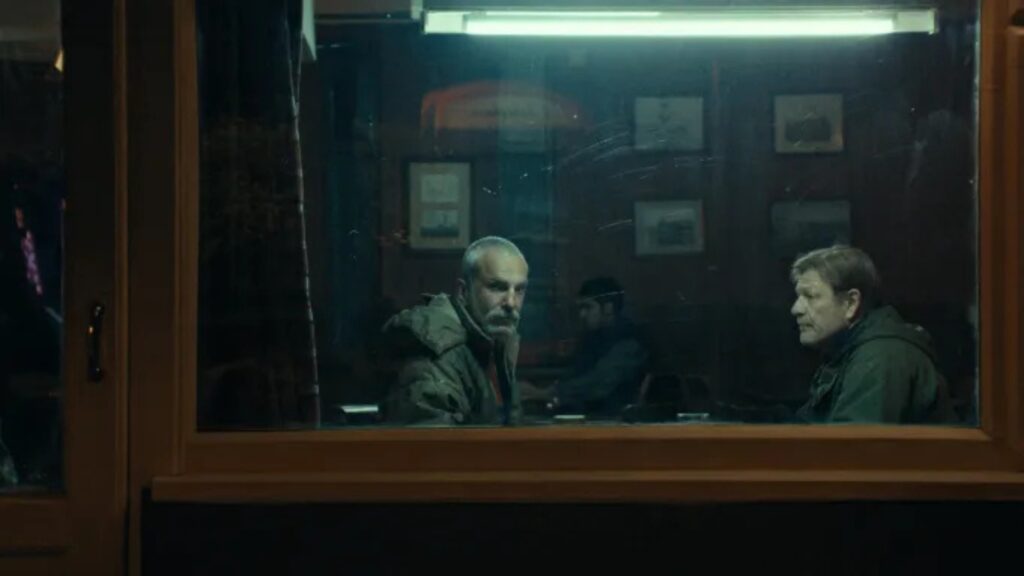
Set in late-20th-century Northern England, Anemone opens when Jem Stoker (Sean Bean), a retired veteran, leaves his home and sets out for a remote forest hut where his estranged brother Ray lives in reclusion. Ray — a former soldier with a past marked by violence — has withdrawn from the world; Jem hopes to bring him back to the family fold and to reckon publicly with their shared history. Over the course of the Anemone film the elder generation’s secrets and the younger generation’s anxieties (represented by Jem’s son Brian and local youth) intersect, and a quiet, brittle drama about legacy, guilt and the possibility (or impossibility) of reconciliation unfolds.
Major themes
- Inheritance of violence — the film asks how political and personal violence echo across generations. It’s less interested in neat moral judgments than in how trauma transmits itself through family rituals and the silences families keep. Reviews note that the film often reads as an elegy to the way violent pasts haunt ordinary domestic life.
- The burden of return — Ray’s physical withdrawal is paired with a narrative where his return (or refusal to return) forces the family to confront choices they made years earlier. The film tracks the cost of not addressing harm at its moment and instead letting it calcify inside relationships.
- Masculinity, shame & remorse — critics have pointed out that the movie interrogates brittle masculinities: how men who survived violence are left with performative stoicism and muffled guilt rather than honest confession. The emotional engine often hums in the quiet between men who cannot speak the language of feeling.
- Small-scale domestic political drama — while the film’s subject matter brushes up against political violence (the brothers’ past implicates paramilitary conflict), the story keeps its focus on how such histories become family stories rather than national narratives.
Tone and style
Ronan Day-Lewis’s direction is restrained and painterly; the camera lingers on faces, forlorn landscapes, and domestic interiors that carry the residue of lives half-lived. The cinematography leans toward muted palettes — fog, damp fields, scrub woodland — which underscores the film’s melancholic tenor. Several critics noted that the film trades in theatrical speeches and quietly staged confrontations rather than plot twists: it’s a talky, actor-forward film that depends on the performances for emotional propulsion.
Performances — the reason to see it
- Daniel Day-Lewis (Ray Stoker): The compass point around which discussion of the film revolves. Reviews praised Day-Lewis’s return for its magnetism — he reportedly imbues Ray with a concentrated mixture of menace, tenderness and unprocessed grief. Even reviewers who were lukewarm on the screenplay commented that Day-Lewis’s presence redeems many of the film’s more didactic moments. His performance is widely described as the highlight and the reason many people sought the movie in theaters.
- Sean Bean (Jem Stoker): Bean’s Jem is the pragmatic, guilt-tethered brother who cannot leave the past alone. His performance provides the film’s outward journey: he is the one who acts, who moves physically toward Ray, and whose attempt at reconciliation sets everything in motion. Critics noted Bean’s steady, weathered presence as essential to the film’s balance.
- Samantha Morton & Samuel Bottomley: Morton plays Nessa (Jem’s wife) and Bottomley the son Brian; both give strong supporting work that roots the film’s family stakes. The younger actors provide a counterpoint: the film isn’t only about the older men but about how their history shapes younger lives.
What critics liked — and what they didn’t
The critical response to Anemone was mixed. Many reviewers singled out Day-Lewis’s comeback as a major event and praised the film’s look, mood and performances. At the same time, several respected critics found the screenplay overwrought or thematically repetitive: the film’s sparse plot and its inclination to linger on speeches left some feeling that the movie didn’t do enough with its provocative moral material. RogerEbert.com and The Guardian offered nuanced takes: both acknowledged the power of the performances while pointing out structural and tonal limits. Rotten Tomatoes aggregates similarly reflected a divided critical field.
Final take — why Anemone matters (even if it’s imperfect).
Anemone is not a film that will convert mainstream audiences; it’s a low-key, performance-first drama that trades on the cultural weight of an actor’s return. But that’s not an accident: the movie is explicitly about presence, about what happens when someone who quietly withdrew from the world re-enters it and forces everyone else to account for what they left undone.
If you love great acting and patient, melancholic cinema that sits with the heaviness of family histories, Anemone is essential viewing — not for plot fireworks but for its insistence on the long-term consequences of violence and silence. If you prefer tidy narratives or propulsive pacing, this will feel slow and sometimes repetitive. Either way, the film is a talkative, meditative piece in which performance — especially Day-Lewis’s — carries the freight.