

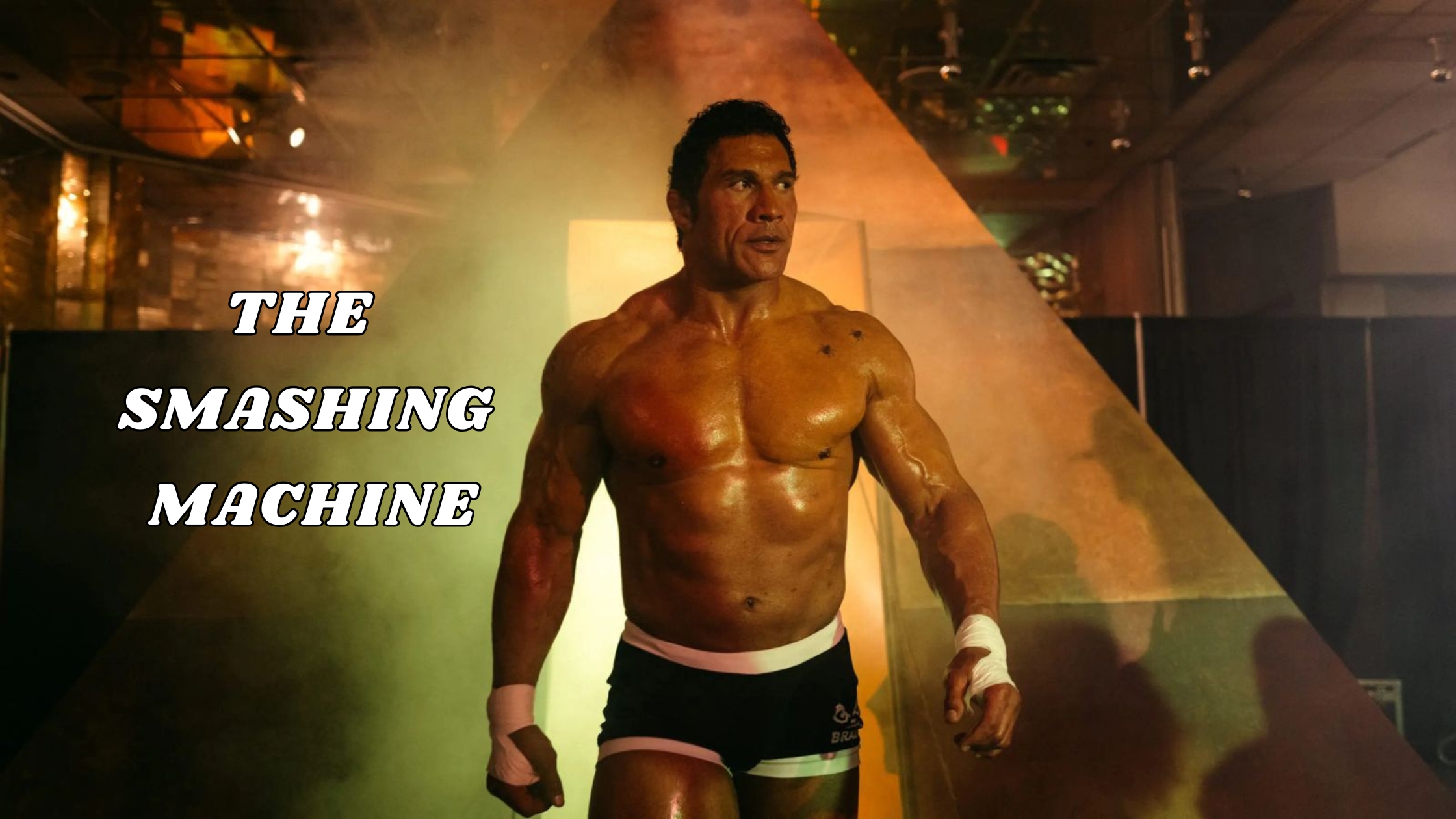
The Smashing Machine — A Gritty, Introspective Fighter Biopic.
The Smashing Machine is not your typical underdog sports movie. Directed, written, produced, and edited by Benny Safdie, this 2025 film dramatizes the real life of Mark Kerr, a legendary mixed-martial-arts (MMA) fighter and former amateur wrestler whose brilliance in the ring was tragically mirrored by his personal demons. Rather than glamorizing fight scenes, Safdie’s version opts for emotional realism — showing Kerr’s body, mind, and relationships cracking under pressure.
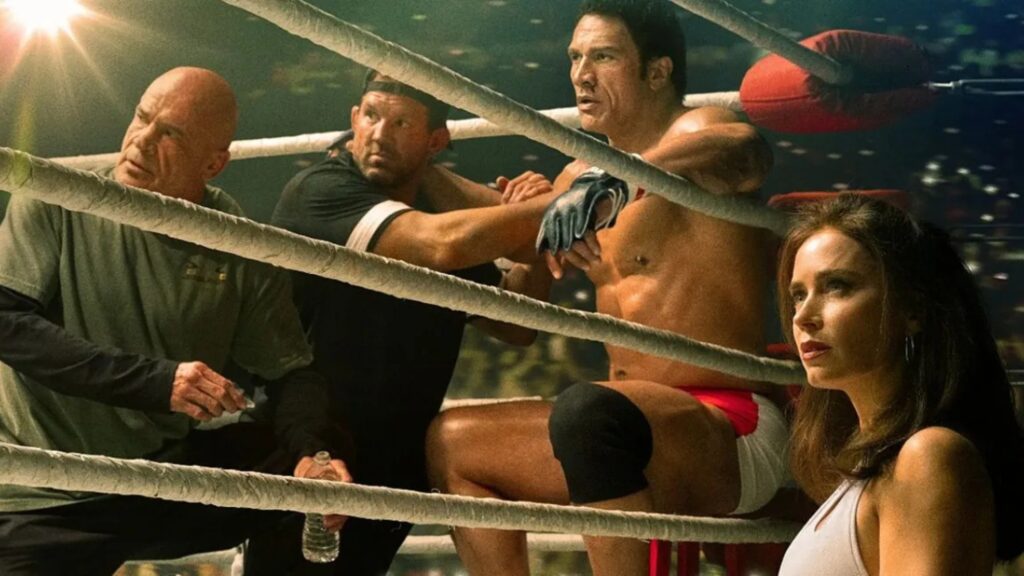
This is a biography of obsession, pain, and the cost of greatness — played out through brutal fights, addiction, and broken love. With Dwayne Johnson taking on the role of Kerr, and Emily Blunt as his girlfriend (and later wife) Dawn Staples, the movie brings star power. But it’s not just spectacle: it’s a character study about a man who built himself like a machine, while fighting to feel human.
Cast — How Many, and Who’s in It.
Key / Principal Cast:
- Dwayne Johnson as Mark Kerr — the central figure, MMA legend.
- Emily Blunt as Dawn Staples, Kerr’s partner.
- Ryan Bader (MMA fighter / friend / rival)
- Bas Rutten as himself (or a version of himself) inside the MMA world.
- Oleksandr Usyk also appears in a supporting role.
Beyond these, there are others in smaller or more technical roles, but the narrative largely revolves around Kerr, Dawn, and a few fighters / industry figures. So for practical storytelling purposes, the core cast is around 5–7 major players.
Who Is the Main (“Means”) Character.
The “means” character in The Smashing Machine is unquestionably Mark Kerr — played by Dwayne Johnson. The film is centered on his life: his rise, his struggles, his pain and his drive. The story is structured around Kerr’s memories, his fights, his addictions, and his relationship with Dawn. While Dawn is important and has her own arc, the emotional and narrative weight stays mostly with Kerr.
Safdie isn’t just making a fighter movie; he’s making a character portrait. Through Kerr, we see both athletic achievement and personal decline. Everything else — the fights, the people, the relationships — orbits around his inner and outer battles.
Box-Office (“Box Collection”).
Here’s what is publicly known about the movie’s financials:
- The Smashing Machine had a production budget of US$ 50 million.
- According to public box-office data, it grossed about US$ 21 million globally / domestically.
- Its opening weekend was modest: Dwayne Johnson himself addressed its career-worst opening for him, pointing out that storytelling and commitment mattered more to him than box-office metrics.
So commercially, it has underperformed relative to its budget — not a blockbuster, but clearly made more for impact than for mainstream profit.
The Niche — Who This Film Is For.
The Smashing Machine fits a very specific niche:
- MMA / Fight Fans — People interested in combat sports, especially the earlier, scrappier days of MMA, will appreciate the authenticity and the inclusion of real fighters.
- Biographical Drama Lovers — Viewers who like stories about real people’s rise and fall, particularly where personal cost is high.
- Character-Driven Cinema Audiences — This isn’t about big action set-pieces; it’s about inner pain, relationships, and identity. Safdie’s style is introspective, not glossy.
- Fans of Dwayne Johnson in Serious Roles — For those who want to see The Rock stretch beyond his usual blockbuster persona, this is a dramatic, transformative performance.
- Art-House / Indie Filmgoers — Because the The Smashing Machine film deviates from standard sports-biopic tropes and is more meditative, it appeals to viewers who prefer emotional nuance and realism over formula.
Deep Dive: Story, Themes, Execution
Story Overview
The Smashing Machine opens with an interview-style sequence, where Mark Kerr reflects on his past. The narrative then shifts into the late 1990s and early 2000s, chronicling his journey from amateur wrestler to becoming one of the early stars in the UFC and Pride Fighting Championships.
Kerr’s professional arc is intercut with his personal life: his relationship with Dawn Staples is volatile. He struggles with pain (from his fights), becomes addicted to prescription drugs, and faces the kind of emotional instability that often comes with athletes under enormous pressure. His friendships in the fight world — particularly with other fighters like Mark Coleman (represented here by Ryan Bader) — add complexity: Kerr is loyal, but deeply haunted.
Some fight scenes are shot in a way that distances us from the ring, with Safdie deliberately avoiding typical fight-movie immersion. Reviewer Roger Ebert points out that many fights are filmed from outside the cage or from high angles, which creates a sense of observation rather than glorification.
Kerr’s journey also leads to one of his biggest fights — the Pride Grand Prix — but that crescendo isn’t just about winning: it’s about whether he can survive his own self-destructive tendencies.
Themes
- Obsession vs. Humanity
- Kerr’s drive to be “the greatest” is his machine — he builds his body and identity around it. But the The Smashing Machine film interrogates whether that same machine kills his soul.
- The film shows how obsession can strip away relationships, health, and emotional stability.
- Addiction and Vulnerability
- Kerr’s reliance on painkillers is not just physical but psychological: fighting becomes a way to justify the cost of his addiction.
- There’s a tragic symmetry: the same body that wins fights is tormented by what it takes to keep fighting.
- Masculinity Under Strain
- The movie explores what it means to be a “warrior” — strong on the outside, fragile inside.
- Kerr’s relationship with Dawn reveals emotional dependencies, shame, and regret. The The Smashing Machine film doesn’t shy away from showing him as tender, broken, and capable of hurting others.
- Friendship and Loyalty
- Kerr’s relationships with fellow fighters (like Ryan Bader’s character) are complicated: camaraderie in the ring, but rivalry outside.
- The idea of legacy: fighters want to be remembered, but are they remembered for fights or for real selves?
- Reality Over Myth
- Rather than mythologize Kerr, Safdie leans into realism: the world of MMA in his era was brutal, under-resourced, and emotionally draining.
- The film resists biopic clichés — there are no big training montages or triumphant montages; the emotional resolution is ambiguous.
Style and Direction
- Benny Safdie’s choice to write, direct, and edit gives the film a very personal, cohesive feel. Instead of building a traditional sports biopic with big fight peaks, he takes an observational approach.
- Cinematography is thoughtfully composed: some scenes are claustrophobic, others distant, emphasizing Kerr’s isolation.
- The score (by Nala Sinephro) oscillates between rock/pop and moody, jazz-inflected pieces, underscoring the internal turmoil more than the external spectacle.
- Safdie deliberately avoids cliché: according to Time of India review, the story resists a conventional arc and leans into honesty over dramatization.
Performances: The Beating Heart
- Dwayne Johnson gives one of his most ambitious performances. Critics say he “disappears” into Mark Kerr — prosthetics, voice modulation, and physical transformation help, but the emotional weight is what sells it.
- Emily Blunt as Dawn Staples brings both strength and vulnerability. The Guardian notes moments where her pain is raw and real: “testy and petulant post-rehab scenes” reveal a complicated woman who loves a fighter but has her own demons.
- Ryan Bader, Bas Rutten, and Oleksandr Usyk add authenticity: not just as actors, but as echoes of the real fight world. Their presence grounds Kerr’s narrative in the real history of MMA.
Strengths of the Film
- Emotional authenticity: Rather than glamorize, the film exposes the cost of greatness — physically, mentally, relationally.
- Performance-centered: Johnson and Blunt carry the movie; their chemistry and emotional realism elevate the story.
- Realistic MMA portrayal: The film doesn’t shy away from showing the brutal, raw side of early MMA.
- Artistic ambition: Safdie’s approach (editing, score, shot composition) gives the biopic a unique tone — not just about winning but surviving.
Weaknesses / Critiques
- Narrative structure: Some critics (like Roger Ebert) feel the anti-biopic structure makes the film feel slack at times — the emotional payoff feels muted.
- Familiar beats: While the tone is different, some of the story’s arcs are familiar (rise, fall, redemption), and Collider points out “generic story beats” even if performances are strong.
- Commercial risk: With a $50 million budget and a modest opening, it’s possible this film may not reach a broad audience, limiting its impact.
- Audience expectations: For viewers expecting a high-octane fight film, the observational, introspective tone may feel underwhelming or slow.
Why The Smashing Machine Matters
- A New Kind of Sports Biopic
- In an era of formulaic sports films, Safdie’s version offers something more reflective: not just victory, but cost.
- It adds depth to the genre by focusing on psychological pain and lived consequence, not just the spectacle of the fight.
- Star Reinvention
- For Dwayne Johnson, this role is transformative: a chance to step outside his action-hero persona and show vulnerability, aging, and inner conflict.
- His casting also brings mainstream attention to a relatively lesser-known fighter’s story, making Kerr’s struggles more visible.
- MMA History & Legacy
- Mark Kerr is a pivotal figure in early MMA. The The Smashing Machine film brings his legacy into cinematic light, celebrating not just his wins but his impact on the sport.
- By portraying real MMA legends (Rutten, Bader), the movie connects fans of cinematic drama with the real fight world, bridging history and emotion.
- Artistic Risk
- It’s a risky film: big budget, niche story, serious tone. That risk is what makes it valuable in the film landscape.
- Safdie’s decision to direct a sports biopic is itself noteworthy — blending his indie sensibility with a genre that often leans mainstream.
Final Thoughts.
The Smashing Machine is a bruising, intimate portrait of a man who built his identity in the ring, only to find that the greatest battles happen when the gloves come off. It’s not just a story of wins and losses — it’s a story of pain, addiction, love, and the ghosts that follow a fighter long after his body stops competing.
If you like character-driven dramas, realistic sports films, or stories about redemption and self-destruction, this film will hit hard. Dwayne Johnson gives one of his most challenging, emotionally layered performances, and Benny Safdie’s direction brings a raw, observational tone that sets this biopic apart.