

We Bury the Dead (2026) — A Thoughtful Zombie Thriller About Grief, Survival, and the Human Cost of Catastrophe.
We Bury the Dead is a 2024 zombie survival horror thriller written and directed by Zak Hilditch that found its way to audiences worldwide in early 2026 with a limited theatrical release in North America and Australasia. The film blends recognizable genre elements — undead creatures and apocalypse — with emotional depth and character-driven storytelling, creating a zombie movie that’s as much about loss and grief as it is about survival.
How Many Cast — Who’s in the Movie.
We Bury the Dead features a modest ensemble focused mostly on the core group of survivors. The credited cast list with significant roles includes about 10–12 performers, with the story revolving strongly around a few central characters.
Main Cast :
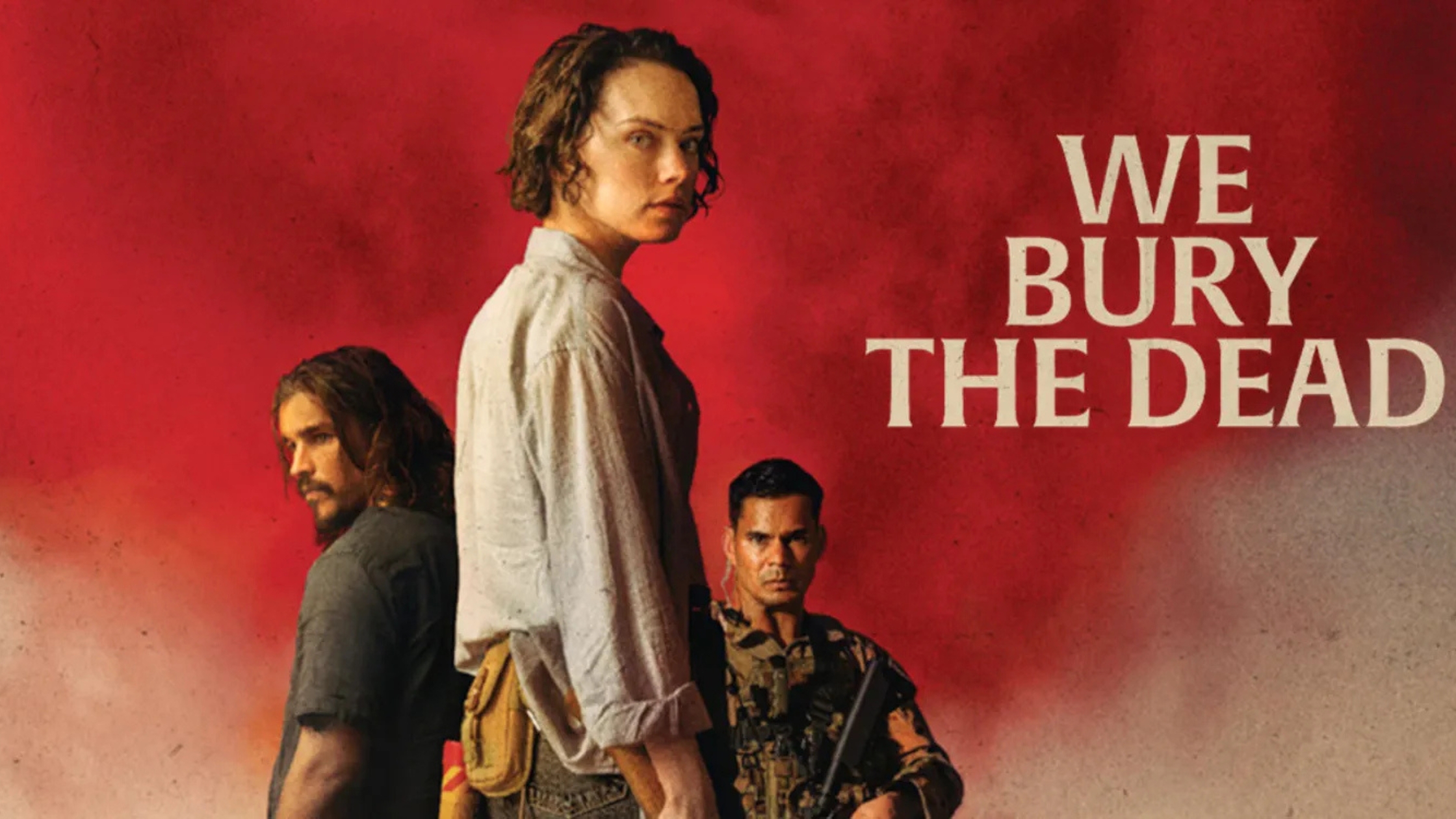
- Daisy Ridley as Ava Newman – the protagonist searching for her missing husband in post-apocalyptic Tasmania.
- Brenton Thwaites as Clay – a fellow volunteer and occasional companion on Ava’s journey.
- Mark Coles Smith as Riley – a soldier who aids the group at key moments.
- Matt Whelan as Mitch – Ava’s husband, whose fate drives much of the emotional narrative.
- Kym Jackson as Lieutenant Wilkie – a military officer in the recovery unit.
- Chloe Hurst as Katie Harris – one of the survivors encountered during their trek.
Additional supporting roles — including Salme Geransar, Deanna Cooney, Holly Hargreaves, Elijah Williams and others — contribute to the wider world of the rebooted Tasmania, where death and resurrection blur the lines between life and threat.
Who Is the “Means” (Main) Character?
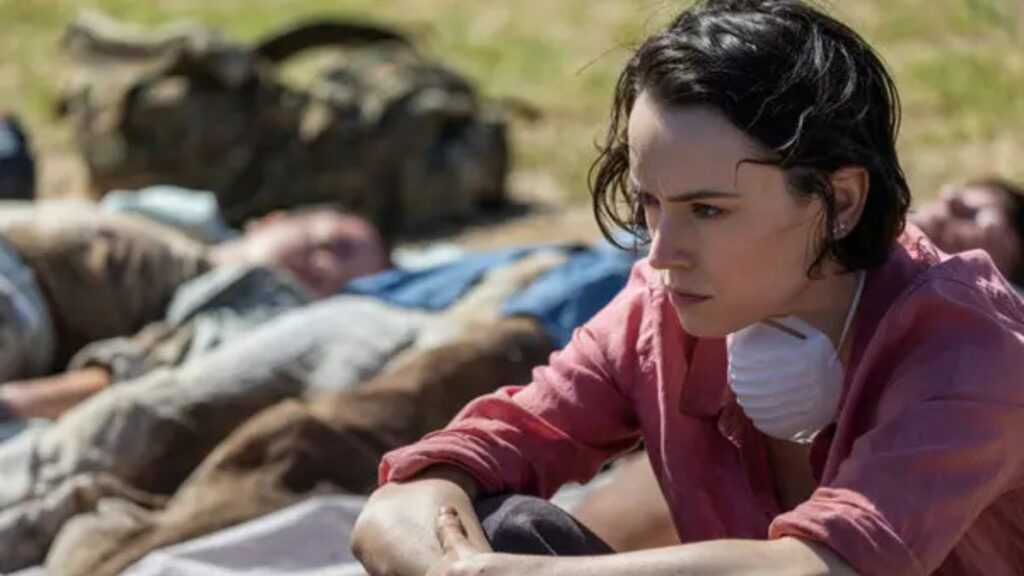
The main character — or “means” character — of We Bury the Dead is Ava Newman, portrayed by Daisy Ridley. Her emotional and physical journey anchors the film: she enters the devastated island of Tasmania to find her husband, Mitch — who was present when a catastrophic weapon detonated off the coast, killing hundreds of thousands and leaving many “dead” frozen like Pompeii victims.
Although others such as Clay and Riley accompany her, the story primarily unfolds through Ava’s perspective — her resilience, denial, grief and evolving understanding of what surviving means in this harsh new world. Her arc — from hopeful searcher to someone confronting loss and the undead reality — drives both the emotional and narrative momentum of the film.
Box Office (“Box Collection”) — How Much It Made.
We Bury the Dead had a limited theatrical release, and thus its box office figures are modest compared to big studio blockbusters. However, it achieved notable milestones within its distribution scope:
- The film grossed approximately $4 million worldwide during its run.
- In its opening weekend in the U.S. alone, it made around $3 million across 1,117 screens — becoming the highest opening weekend gross in the history of its distributor, Vertical Entertainment.
- Its performance was respectable for an indie horror title released during a packed cinematic season, showing healthy interest from horror and genre audiences despite lacking major franchise backing.
Though not a blockbuster by entertainment industry standards, the film’s commercial reception confirmed that zombie stories with emotional cores still attract audiences, especially when supported by star power and festival buzz.
The Niche — Who This Movie Is For.
Unlike fast-paced gore thrillers, this film leans into slow-burn terror and psychological dread, making it appealing to viewers who enjoy thoughtful horror that emphasizes mood and character over constant jumps.
Character-Driven Thriller Enthusiasts
The zombie concept here isn’t just about survival — it’s used as a lens to explore grief, trauma and attachment. Those who appreciate horror with emotional resonance will find this take compelling.
Fans of Performances and Emotional Stories
Daisy Ridley’s performance, described as “magnetic” and pushing her to emotional and physical limits, forms the emotional core. Her arc of loss and denial connects with viewers who enjoy performances that prioritize internal journey over spectacle.
Indie/Horror Festival Followers
With its premiere at South by Southwest and nominations at genre festivals like Sitges, the film resonates with audiences who follow horror cinema beyond mainstream franchises.
In short, We Bury the Dead sits at the crossroads of genre entertainment and introspective drama — a zombie movie that’s as much about mourning and memory as it is about dread and survival.
Deep Dive — Story, Themes, Style, and Execution.
Plot Overview (Without Major Spoilers)
The story begins with a catastrophic event: the United States inadvertently detonates a powerful experimental weapon off the eastern coast of Tasmania, leading to the destruction of Hobart and the presumed death of nearly everyone on the island. However, the dead do not remain dead. Many bodies remain frozen mid-gesture, only to later regain motor function and become undead — a haunting twist on traditional zombie lore.
Ava Newman, a physical therapist who lost contact with her husband Mitch during the disaster, chooses to volunteer with an Australian military effort tasked with retrieving and burying the bodies of the deceased. Assigned to a recovery unit, she soon learns that some of the “dead” are not truly gone — they rise and become hostile, turning the cleanup mission into a mission of survival.
When her unit is stationed far from where she believes Mitch might be, Ava joins forces with Clay, a roguish and reckless volunteer who brings both tension and dark humor to their uneasy partnership. The two abandon their unit, commandeer a motorcycle, and embark on a desperate cross-Tasmania journey into forbidden territory in the hopes of finding Mitch — or at least closure.
Along the way, they encounter the undead in various states of decay and aggression, forcing them to make harrowing decisions. They also meet Riley, a lone soldier who crosses their path and influences the dynamic of the group.
The narrative interweaves flashbacks — offering glimpses of Ava’s past life with Mitch — with gritty present-day challenges.
These flashbacks complicate the simple horror setup: Ava’s grief, denial and hope are constant companions, making both the threat and her response deeply human.
Themes and Emotional Core
We Bury the Dead uses its zombie apocalypse setting as a backdrop for several emotionally rich themes that elevate it above many genre films:
Grief and Loss
Ava’s quest to find her husband becomes a meditation on grief. Rather than endless action, the film often focuses on her emotional reactions — denial, hope, desperation, and eventual acceptance — offering a deeper psychological dimension than typical undead thrillers.
The Cost of Survival
The We Bury the Dead movie explores what survival means when the world has fallen apart. It complicates survival horror by showing that staying alive doesn’t always equate to being alive inside: emotional attachment, memory and meaning matter just as much.
Memory and Humanity
The undead here aren’t just mindless monsters. Because they were loved ones, the film occasionally evokes sadness and tragedy alongside fear — making audiences consider the human cost of apocalypse, not just the physical threat.
Style, Direction and Execution
Zak Hilditch — known for atmospheric and thoughtful storytelling — takes a more contemplative approach to zombie horror. Instead of a fast-paced rampage, the film uses slow burns, haunting landscapes and quiet dread to build suspense.
The Tasmanian setting — rugged, wild, and isolated — reinforces the film’s emotional tone: a stark backdrop where life and death blur, and where Ava’s internal journey mirrors the desolate, shattered world around her.
Cinematography emphasizes wide, evocative shots and discomforting pauses, allowing audiences to sit with the horror and the humanity in equal measure. This isn’t a film that relies on overt jump scares or constant gore; instead, it earns tension through pacing, character moments and emotional undercurrents.
Critical Reception
Critics have responded favorably to We Bury the Dead, with many appreciating its depth and Ridley’s performance:
- On Rotten Tomatoes, the film holds an ~88% critics’ score, with praise for its thoughtful use of familiar zombie tropes, cinematography and emotional focus.
- Many reviews highlight Daisy Ridley’s portrayal as magnetic and powerful, anchoring a story that balances survival horror with meditation on loss.
- Some critics note the film’s pacing and minimalist approach may not satisfy viewers seeking fast-paced action, but commend its haunting thematic ambition nonetheless.
Audience reactions are more mixed — while some embrace the emotional depth and fresh approach, others criticize the slower pacing and unconventional structure for a zombie film.
Final Thoughts.
We Bury the Dead stands out in the crowded zombie genre by leaning into grief, emotion and human storytelling rather than relentless action. Anchored by a compelling performance from Daisy Ridley and grounded in an evocative post-apocalyptic Tasmania, the film balances tension, dread and sadness in a way that makes it feel less like a typical horror movie and more like a meditation on survival and loss.
Although its box office is modest compared to mainstream blockbusters, its achievement as the biggest opening weekend for its distributor and its strong critical response confirm that thoughtful genre films can resonate with audiences.
Whether you’re a fan of horror that makes you think, a zombie apocalypse story told through a deeply human lens, or a character-driven thriller with resonant themes, We Bury the Dead offers an experience that lingers long after the credits roll — a story not just about surviving death, but about learning how to live beside it