

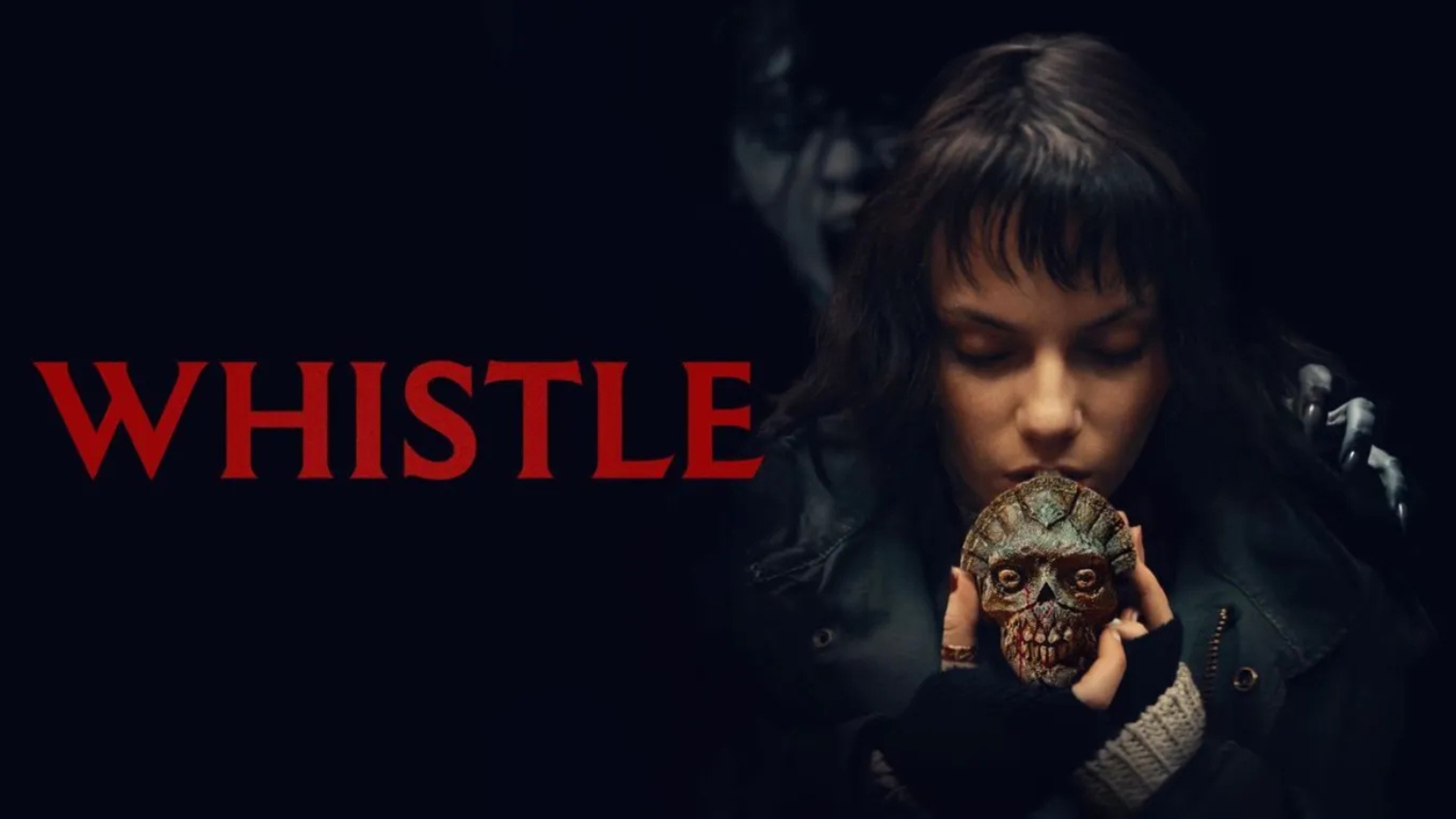
Whistle (2026) — A Cursed Artefact Horror That Blows a Deadly Tune.
Whistle is a 2025 supernatural horror film directed by Corin Hardy and written by Owen Egerton that brings a fresh twist to the “cursed object” subgenre. When a group of high-school students accidentally unleashes a terrifying curse tied to an ancient Aztec death whistle, their very fates come back to hunt them with brutal, often ingenious methods. The movie premiered at Fantastic Fest in September 2025 and hit North American theaters on February 6, 2026 before rolling out internationally in mid-February.
How Many Cast — The Ensemble That Faces Certain Death.
Whistle features a broad ensemble of performers — around 20 credited cast members — most of whom are teenagers or adults connected to the group cursed by the whistle.
Main Cast
- Dafne Keen as Chrys Willet – The film’s core protagonist; a new student drawn into the mystery.
- Sophie Nélisse as Ellie Gains – Chrys’s love interest and emotional partner in the horror.
- Sky Yang as Rel Taylor – Chrys’s cousin and one of the close-knit group.
- Jhaleil Swaby as Dean Jackson – A teammate ostracized by the group’s dynamic.
- Ali Skovbye as Grace Browning – Dean’s girlfriend and a victim of the curse.
- Percy Hynes White as Noah Haggerty – A violent local whose arc complicates the survival story.
- Michelle Fairley as Ivy Raymore – Grandmother of a deceased teammate who knows occult lore.
- Nick Frost as Mr. Craven – A school employee entwined in the unfolding horrors.
Additional Supporting Roles
The film also features other classmates, authority figures, and extras as the whistle’s curse manifests in increasingly grotesque and unexpected ways. This wider cast fleshes out the high-school setting and provides the body count necessary for a horror film of this scale.
Who Is the “Means” (Main) Character?
The central character of Whistle — the one whose emotional arc and fate carry most of the narrative weight — is Chrys Willet, played by Dafne Keen.
Chrys Willet — From Outsider to Fate Fighter
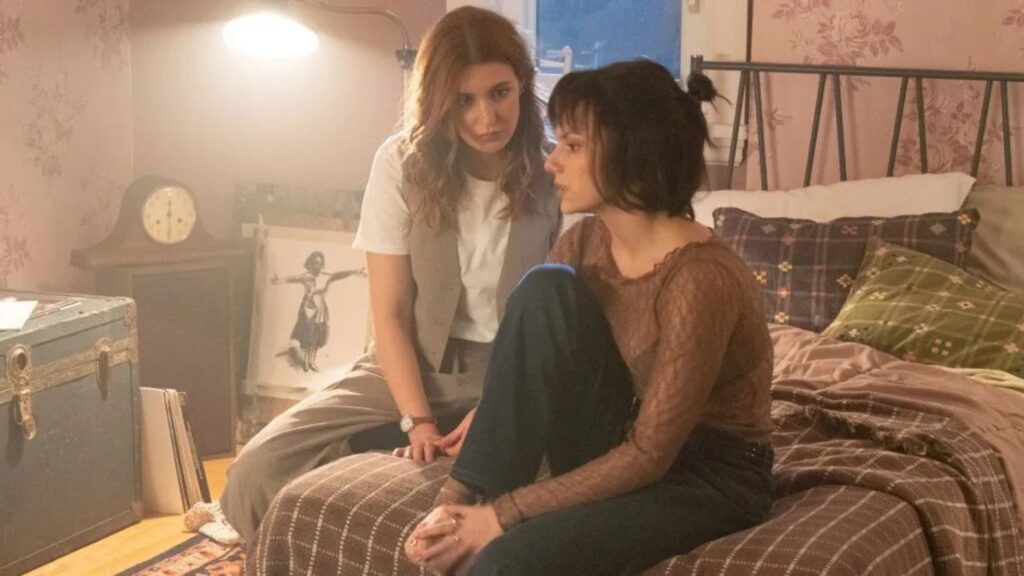
Chrys is a recent transfer student who becomes enmeshed in the cursed whistle’s mystery after inheriting the locker of a deceased teammate. Rather than simply being another horror trope, her journey is the emotional core of the movie. Her curiosity about the whistle — driven by her desire to understand her place in a new community — propels the plot forward, and her evolving relationship with Ellie gives the story an emotional resonance rare in slasher-style films.
While there are multiple POVs and dying characters, Whistle centers most of its subtext, emotional beats and horror logic around Chrys’s efforts to understand the curse and try (largely in vain) to stop it — making her the effective primary character.
Box Collection — How the Movie Performed Financially.
Whistle isn’t a blockbuster by wide commercial standards, but for a supernatural horror film released through Shudder, IFC Films, and Independent Film Company it showed healthy genre interest:
- Reported Worldwide Gross: Approximately $3 million in theatrical revenue.
The film’s theatrical run was limited yet respectable for a horror release with niche backing, especially as it wasn’t driven by mainstream studio-level marketing. Horror fans, curious viewers and genre festival audiences helped it break even in limited theatrical windows before it transitions to streaming on platforms like Shudder and digital on demand.
Compared to tentpole films, $3 million is modest — but for an R-rated horror movie emerging from festival buzz and genre anticipation, it’s a sign of healthy community engagement rather than blockbuster dominance.
The Niche — Who Whistle Is Made For.
Whistle sits firmly in the supernatural horror / cursed artefact subgenre, appealing to several overlapping groups:
Fans of Cursed Object Horror
If you enjoyed movies like The Ring or It Follows, Whistle draws on similar dread mechanics — an uncanny object that upends reality and brings death close to the protagonists.
Teen Horror Enthusiasts
Much like Final Destination or I Know What You Did Last Summer, the film marries supernatural dread with the energy of a high-school ensemble and the personal stakes of young adult relationships.
Graphic and Concept-Driven Death Scenes
The film’s premise — that future deaths are summoned to hunt survivors — allows for creative, fate-linked death sequences that appeal to viewers who enjoy horror mechanics with a conceptual twist.
Character-Focused Horror
Unlike pure body-count slashers, Whistle invests in relationships — particularly the burgeoning bond between Chrys and Ellie — making it attractive to audiences who like emotional stakes alongside scares.
Mythology and Lore Lovers
The incorporation of Aztec death mythology and cursed artefacts adds a layer of occult mystery, appealing to fans of horror films that use ancient lore rather than straightforward ghosts or killers.
In essence, Whistle straddles supernatural mystery, horror spectacle, and teen drama, making it niche enough for horror aficionados but accessible to mainstream fright seekers.
Deep Details — Plot, Themes, Style, and Execution.
Plot Overview (Without Major Spoilers)
Whistle opens amid an eerie incident: high-school basketball star Mason “Horse” Raymore experiences terrifying visions moments before spontaneously bursting into flames and dying — an unsettling death that hints at forces beyond explanation. Months later, Chrys Willet inherits Mason’s old locker at school. Inside, instead of textbooks or sports gear, she finds an ancient skull-shaped whistle engraved with cryptic symbols.
When a well-meaning teacher blows the whistle — drawn by curiosity — the sound unleashes something dark and irreversible: anyone who hears it becomes haunted by an apparition representing their future death, which begins stalking and killing them in the present. This sets off a chain reaction of terrifying and often gruesome encounters as the whistle travels among Chrys’s group of detained students.
The group’s initial disbelief turns to horror as they realize the curse follows a rule they cannot escape — unless they figure out the whistle’s origins and how to break the cycle. Along the way, they seek answers from Ivy Raymore (Michelle Fairley), Mason’s occult-knowledgeable grandmother, who reluctantly explains the whistle’s mythology and the chilling connection between the sound it emits and fate itself.
As friends struggle to survive, tensions rise. Some characters cling to hope, others descend into panic, and a few lash out in self-destructive ways. The film’s climax plays out in a terrifying confrontation where survival hinges on understanding — and confronting — the final implications of a fate that comes calling.
Themes Explored
Though Whistle primarily delivers horror thrills, it touches on deeper themes:
Fate vs Free Will
The whistle’s supernatural rule — that it summons future death manifestations — forces characters (especially Chrys and Ellie) to grapple with whether fate is preordained or can be altered. The horror isn’t just physical: it’s psychological, rooted in the inevitability of mortality.
Mortality and Meaning
Characters are not random victims. Their deaths are tied to their futures, which raises existential questions about what would have happened later in life — and whether knowing about one’s future can change destiny or simply hasten doom.
Friendship and Love Amid Horror
The emotional core — particularly the relationship between Chrys and Ellie — brings weight to the story, reminding audiences that even in supernatural terror, human connection matters. Their bond gives viewers someone to root for beyond the horror spectacle.
Style and Execution
Director Corin Hardy — known for atmospheric horror like The Nun — leans into a blend of psychological tension and visceral fear. Whistle uses a mix of eerie sound design, unsettling visuals, and imagery tied to fate and death to build foreboding.
The horror is not just in jump scares but in the sense of inevitability — a looming dread that each character’s fate might be known before death strikes. Critics have pointed out that the kills, though inventive at times, sometimes lean on genre tropes and familiar patterns, yet the emotional beats and mythology help distinguish it from more generic slashers.
Critical Reception
Critical reception has been mixed:
- Reviews note that while Whistle offers creative death sequences and a novel cursed-artefact premise, it sometimes falters in character development and fully realizing its deeper ideas.
- Some critics praise the emotional resonance and chemistry between Dafne Keen and Sophie Nélisse, particularly highlighting their relationship as a strength.
- Audience reactions online vary, with some horror fans enjoying the inventive premise and others criticizing clichés or execution — suggesting that Whistle is fun, if not always wholly scary.
Final Thoughts — A Whistle That Echoes in the Mind.
Whistle isn’t just a conventional teen horror movie — it’s a curious blend of supernatural dread, mythological terror, and emotional connection. By making fate itself the antagonist, the film plays on fears that extend beyond jump scares and gross-out kills.
With a strong ensemble cast, creative premise, and thematic threads about mortality and human bonds, Whistle offers both genre thrills and emotional depth. Though it doesn’t reinvent horror, it provides a memorable — if uneven — experience that taps into primal fears about destiny, death, and the consequences of curiosity.
Whether you’re drawn to supernatural horror, teen ensemble dramas, or cursed-object tales with a twist, Whistle delivers a haunting journey that lingers long after the final note of its eerie whistle fades away.