


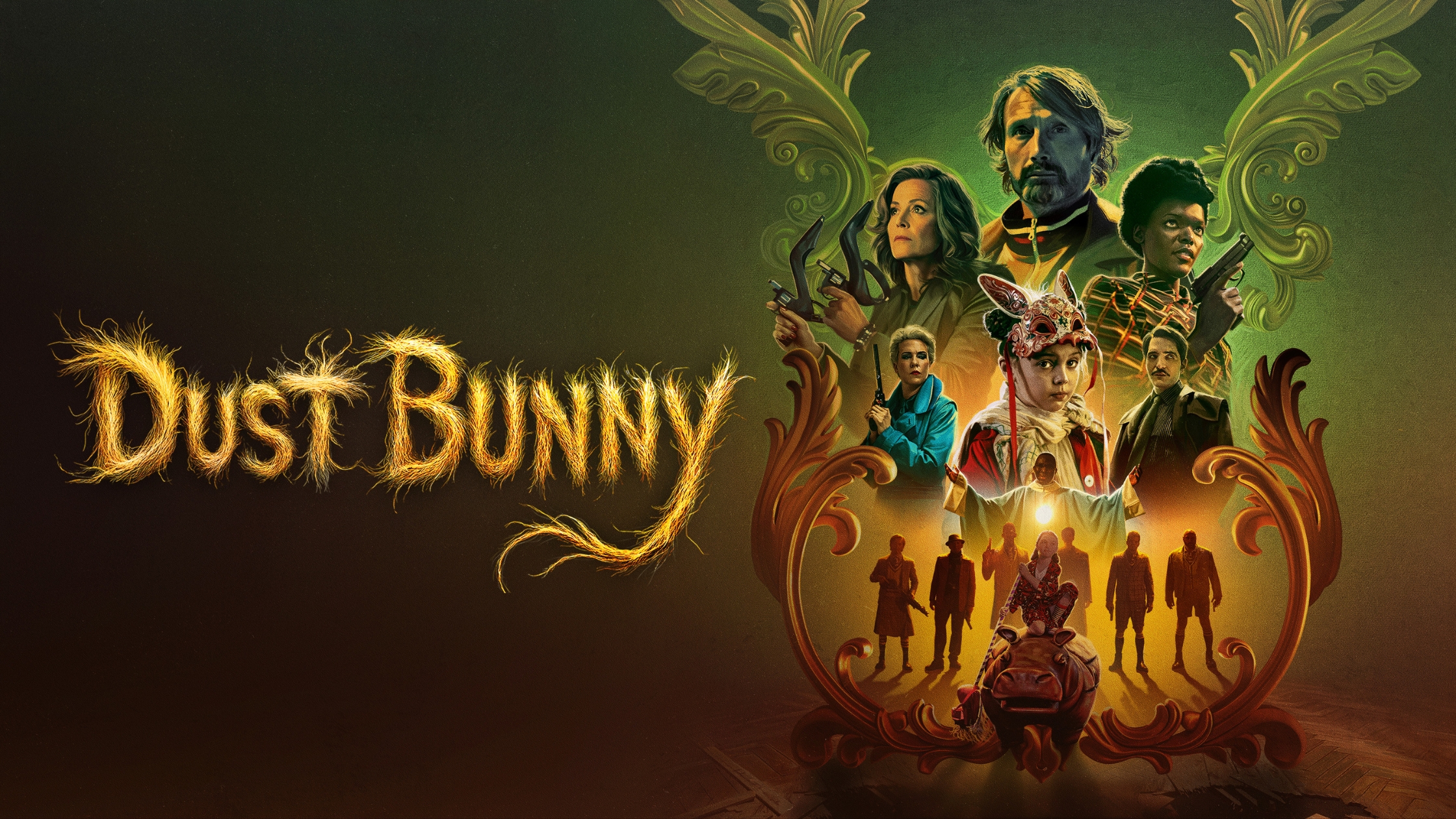
Dust Bunny — A Wild, Stylish Fairy-Tale Horror with Heart.
Dust Bunny (2025) is one of the year’s most imaginative and genre-bending films — a dark fantasy action-horror hybrid directed by Bryan Fuller in his feature film directorial debut. Fuller, already known for cult genre television (Hannibal, Pushing Daisies), takes audiences into a half-storybook, half-nightmare version of New York where childhood fears, hitmen, and literal monsters collide. The movie premiered in the Midnight Madness program at the 2025 Toronto International Film Festival on September 9 before opening theatrically in the United States on December 12, 2025.
What makes Dust Bunny stand out isn’t just its bizarre title or surreal premise — it’s the way Fuller marries whimsy, horror, emotional depth, and stylistic flair into a film that feels like a cross between Léon: The Professional, The City of Lost Children, and an eerie fairy tale.
Cast — Who’s In the Movie (How Many Cast).
The cast of Dust Bunny is compact but striking, featuring a mix of established stars and strong supporting players. It’s the sort of ensemble where each actor brings personality and commitment, even amid the film’s surreal tone:
Principal Cast
- Mads Mikkelsen as Resident 5B / Hitman — a mysterious neighbor and professional killer with a shadowy past.
- Sophie Sloan as Aurora — an eight-year-old girl convinced a monster lives under her bed and “ate” her family.
- Sigourney Weaver as Laverne — a handler-like figure with a dangerous role in the unfolding chaos.
- Sheila Atim as Brenda — a child protection agent who turns out to have deeper connections to the conflict.
- David Dastmalchian as Conspicuously Inconspicuous Man — a quirky adversary caught up in the web of assassins.
- Rebecca Henderson as an intimidating woman, and Line Kruse as Aurora’s mother — both rounding out the movie’s small but impactful supporting cast.
Overall, the credited cast list with significant roles is around 7–10 performers, with the story focused tightly on this core group.
Who Is the “Means” (Main) Character?
Two characters share the central emotional arc of Dust Bunny, but if you had to identify the single most pivotal figure — the “means” character — it’s Aurora (Sophie Sloan):
Aurora is the lens through which we first enter this strange world. She’s the one who believes there’s a monster under her bed and actively seeks help to “kill” it. Her conviction drives the plot forward — prompting her to approach the mysterious neighbor, which sets off the chain of bizarre events.
That said, Resident 5B (Mads Mikkelsen) functions as the narrative catalyst and counterpart — his internal arc and shifting relationship with Aurora form the emotional backbone of the movie. His forced transition from detached killer to protector reflects the film’s deeper themes of trust, fear, and unlikely family bonds.
In other words:
- Aurora is the emotional and narrative engine — the character whose beliefs set everything in motion.
- Resident 5B is the reluctant co-lead whose transformation and interactions with her provide the story’s emotional depth.
Box Office (“Box Collection”) — How Much It Made.
Dust Bunny does not have blockbuster grosses like a superhero tentpole, but its box office reflects its indie-leaning, stylistically bold nature. According to publicly available figures:
- Worldwide Gross: approximately $1 million.
These numbers, while modest, must be contextualized: Dust Bunny premiered at a major festival and received a limited theatrical release rather than a wide blockbuster rollout. Its earnings are typical of a stylized, niche genre film that gains much of its audience through festival buzz, critical praise, and later digital/streaming platforms.
The Niche — Who This Movie Is For.
Dust Bunny occupies a unique niche where fantasy, whimsical horror, and emotional character drama intersect. This is not a straight jump-scare horror film nor is it a simple family fantasy. Instead, its tone and content appeal to a specific audience:
Fans of Atmospheric, Imaginative Horror
Rather than conventional gore, the film’s fantasy horror is stylized, sometimes surreal, often eerie but never gratuitous, reminiscent of 1980s dark fantasy classics like Gremlins and Return to Oz — albeit with adult edges.
Viewers Who Appreciate Whimsical, Character-Driven Stories
The Dust Bunny movie blends childlike wonder with adult reality — the fears under the bed become metaphors for trauma and belief. It’s for audiences open to genre blends rather than strict category fare.
Fans of Bryan Fuller and Auteur-Flavored Cinema
Those who appreciate Fuller’s previous work (visually inventive, emotionally resonant, thematically rich) will find Dust Bunny compelling — especially as it brings his voice to a feature film format.
Actors-First Enthusiasts
Mads Mikkelsen’s performance — blending intimidation with tenderness — alongside a breakout turn from Sophie Sloan gives the film emotional gravity that appeals to fans of performance-driven genre films.
Lovers of Surreal, Fairy-Tale-Infused Dangerous Worlds
The movie’s bizarre tone — equal parts enchanted storybook and grim dark alley — attracts viewers who like films that sit at the intersection of fantasy, horror, and fairy tale.
Deep Dive — Story, Themes, Style, and Execution.
Plot Summary (Without Major Spoilers).
Dust Bunny opens in an eerie yet whimsical version of New York City, where an eight-year-old girl named Aurora (Sophie Sloan) lives with her parents. One night, brokenhearted and convinced that there’s something terrible under her bed that “ate” her family, she becomes obsessed with this unseen monster.
Her parents dismiss her fears, but Aurora’s conviction leads her to spy on her neighbor — a mysterious man known only as Resident 5B (Mads Mikkelsen), who lives across the hall. When she witnesses him killing a dragon-like creature in Chinatown, she becomes convinced he can help.
Aurora steals money and leaves a note asking 5B to kill the monster under her bed. 5B — a hitman with his own demons — is initially skeptical. He suspects Aurora’s parents were accidentally killed by professional assassins after him. As he investigates and tries to protect Aurora, the story unfolds through a strange mix of action, humor, emotional tenderness, and surreal imagery.
Throughout the film, Aurora’s belief in the monster blurs the lines between imagination and reality. At times, the creature feels like a product of her fears; at others, it feels terrifyingly real. Alongside assassins, hidden handlers, and FBI-like agents, the film’s conflict builds toward a dramatic climax where the “monster” — a giant, ravenous bunny — emerges.
In a twist that embodies the film’s metaphoric core, Aurora learns she can control the monster, transforming fear into empowerment. The hitman and the girl — unlikely allies — leave the city to start anew, suggesting that sometimes the things that frighten us can become forces we learn to live with and even control.
Themes — What the Movie Is Really About.
Childhood Fear and Imagination
At its heart, Dust Bunny is about the things children fear most — literally and figuratively. Aurora’s fear of the monster under her bed becomes a story about believing children and respecting their inner worlds.
Trauma, Loss, and Healing
The film deals with grief and trauma in a unique way — instead of ignoring Aurora’s claims, it treats her fear with gravity and allows the narrative to explore deeper emotional truths.
Unlikely Bonds
The relationship between Aurora and Resident 5B is central. He’s rough, detached, and cynical, while she is innocent, confident, and unfiltered. Their bond shows how trust can form between odd characters and how protection can evolve into care.
Monsters as Metaphor
The film uses its titular creature — both terrifying and weirdly whimsical — as a symbol for inner monsters (fear, grief, abandonment). Aurora’s ability to control it in the end suggests that confronting fear can transform it into strength.
Visual Style and Direction.
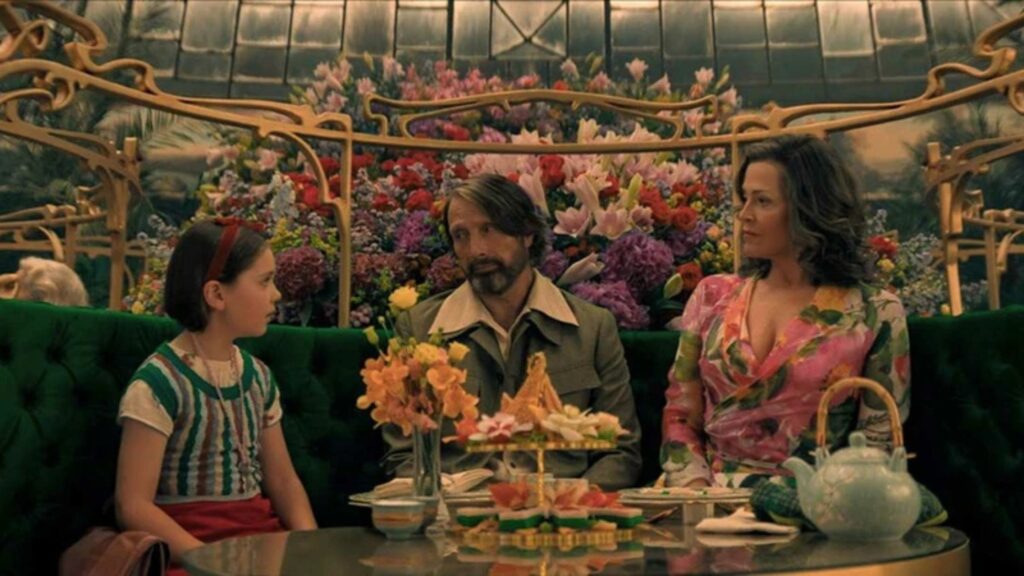
Bryan Fuller’s visual sensibility is everything in this movie. Dust Bunny embraces a fantastical, storybook aesthetic — a blend of vibrant yet eerie imagery that sits somewhere between fairy tale and nightmare. Critics have noted its dazzling style and imaginative set pieces, with comparisons to the works of Tim Burton, Wes Anderson, and Pierre Jeunet for its idiosyncratic tone.
The film’s use of color, framing, and visual composition creates an atmosphere that is at once whimsical and unsettling — echoing dream logic more than straightforward reality. Even when the story ventures into action and violence, it retains that surreal, almost hand-painted sensibility.
Cinematographer Nicole Hirsch Whitaker and editor Lisa Lassek bring Fuller’s vision to life with a playful yet tense rhythm that keeps viewers guessing and emotionally engaged.
Reception — Critics and Audiences.
Dust Bunny has been widely praised by critics, earning strong scores on review aggregators — around 85% on Rotten Tomatoes with positive notices for its cast chemistry, visual imagination, and unique tone.
Critics highlight Mads Mikkelsen and Sophie Sloan’s magnetic rapport and Fuller’s distinctive voice as major strengths. Many reviews describe it as a “dazzlingly imaginative and stylish” feature debut.
Audience reactions are more mixed — while many embrace the film’s weirdness and emotional layers, others find the tone uneven or the narrative puzzling. Some forum discussions note that the movie’s structure and character development can feel fragmented, especially early on.
Nonetheless, the film is gaining a cult following among viewers who appreciate its genre mash-ups and its offbeat fairytale-like heart.
Why Dust Bunny Matters.
- Feature Debut with Vision: Bryan Fuller’s first feature film shows a confident director with a unique aesthetic that blends horror, fantasy, and emotional drama in unexpected ways.
- Standout Performances: The chemistry between Mikkelsen and Sloan anchors the film emotionally and thematically.
- Genre Innovation: It pushes the boundaries of what fantasy horror can be — simultaneously whimsical, scary, and heartfelt.
- Visual Storytelling: Its stylistic flourishes and dreamlike world-building make it visually memorable.
- Emotional Core: Beneath the bizarre surface lies a tale about fear, belief, trust, and transformation.
Final Thoughts.
Dust Bunny is more than a genre flick — it’s a bold, weirdly touching fairytale for adults and genre lovers. With its striking visuals, charismatic leads, and imaginative narrative, it challenges expectations and offers a fresh voice in 2025 cinema. While not a mainstream blockbuster, its artistic courage, emotional resonance, and cult appeal make it a film worth experiencing — especially for anyone who enjoys genre blending that transcends simple categorization.