


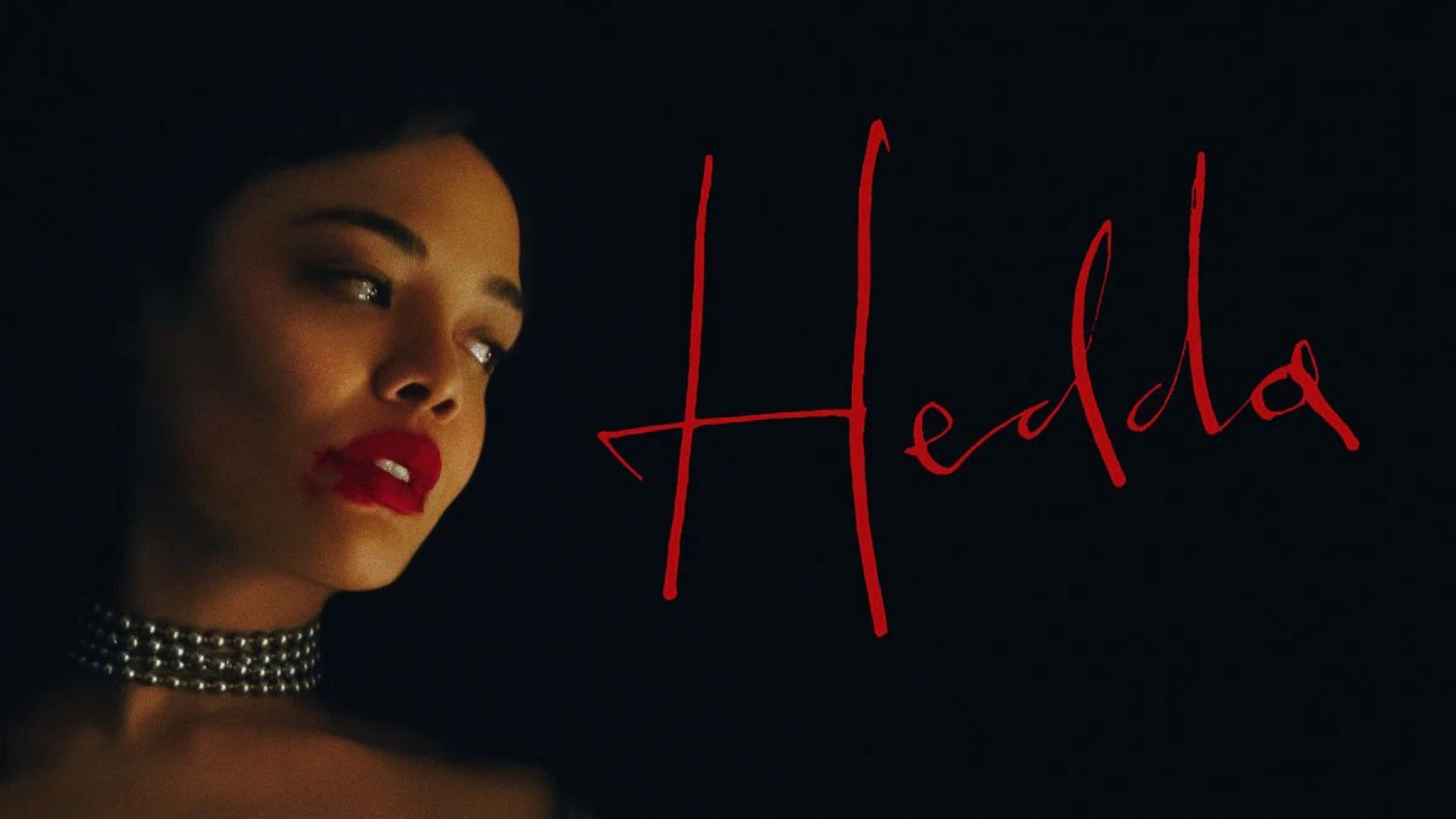
Hedda (2025) — A Bold, Queer Reimagining of a Classic Tragedy.
Hedda (2025) is one of the most ambitious, provocative drama films of the year — a reimagining of Henrik Ibsen’s classic play Hedda Gabler set in 1950s England and directed, written, and produced by Nia DaCosta. Far from a simple period translation, this version reinterprets Ibsen’s psychologically cracked heroine through a modern, emotionally urgent lens that explores desire, power, repression, and agency in a tightly wound, single-night drama. Its premiere at the 2025 Toronto International Film Festival made waves for its bold performance, sumptuous design, and thematic intensity.
How Many Cast — and Who’s in the Movie.
Hedda assembles a small, focused ensemble of richly drawn characters, reflecting its origins in stage drama and its emphasis on interpersonal conflict. The principal credited cast includes:
Main Cast
- Tessa Thompson as Hedda Gabler — the complex, enigmatic protagonist.
- Imogen Poots as Thea Clifton — a spirited aspiring writer and guest at Hedda’s party.
- Tom Bateman as George Tesman — Hedda’s somewhat idealistic husband.
- Nina Hoss as Eileen Lovborg — Hedda’s former lover and a re-imagined, queer voice of romantic and intellectual tension.
- Nicholas Pinnock as Judge Roland Brack — an influential guest with his own motivations.
Supporting Cast
- Finbar Lynch as Professor Greenwood — an academic whose favor the Tesmans seek.
- Mirren Mack as Tabitha Greenwood — Greenwood’s young wife.
- Jamael Westman as David and Saffron Hocking as Jane Ji — additional guests at the party.
- Kathryn Hunter as Bertie — rounding out the ensemble at the estate party.
In total, the film is anchored by around 9–12 credited performers whose interactions form the emotional and dramatic core of the story — mirroring the intimate, high-tension structure of the original play.
What Hedda lacks in a sprawling cast, it more than makes up for in intensity, emotional complexity, and dramatic interplay, allowing each character to profoundly affect the story’s psychological landscape.
Who Is the “Means” (Main) Character of the Movie?
At the heart of Hedda — as in Ibsen’s original — is Hedda Gabler, played with magnetic intensity by Tessa Thompson. The narrative revolves around her psychological conflicts, motivations, and choices over the course of a single, eventful night. Hedda is a woman who feels trapped — by expectations, by marriage, by society — yet retains an uncanny drive to manipulate the emotional world around her and assert control in ways both subtle and destructive.
Though the supporting characters — especially Eileen Lovborg and Thea Clifton — carry their own arcs and provide contrast to Hedda’s restless energy, it is Hedda’s inner life that defines the movie. Her class status, sexuality, and conflicting impulses give the film its psychological heft: she is both protagonist and problem, object and agent — a figure whose desires shape every dramatic turn.
Box Office (“Box Collection”) — What It Made
Hedda was released in select theaters beginning October 22, 2025 before its global streaming release on Amazon Prime Video on October 29, 2025. Being a specialty, festival-driven drama rather than a mass commercial release, its theatrical numbers are understandably modest:
- Domestic (U.S.) Box Office: ~$8,393
- International Box Office: ~$6,959
- Worldwide Gross: ~$15,352 total theatrical revenue.
These low figures reflect a limited theatrical footprint — often just a handful of screens — typical of prestige films that transition quickly to streaming platforms. But box office alone doesn’t capture the film’s cultural reach, especially once it became available to Amazon Prime subscribers, where it has found a much broader audience.
This release strategy — festival + limited theaters + streaming — is now common for adult-oriented dramas aiming for critical attention and awards season visibility, rather than traditional box office dominance.
The Niche — Who This Movie Is For
Hedda sits in a very specific niche that appeals to several overlapping audiences:
Fans of Literary and Theatrical Adaptations
Viewers familiar with Henrik Ibsen’s Hedda Gabler, one of the most influential plays in modern drama, will appreciate the film’s thoughtful translation of stage tension to cinematic form.
Character-Driven, Psychological Drama Lovers
This is not an action-oriented movie; it’s a tightly structured character study that unfolds like a chamber drama over the course of a single intense evening, offering psychological depth and emotional complexity rather than plot spectacle.
Art-House and Festival Audiences
Critically, the film has been celebrated as a worthy reinvention of Ibsen’s work, with excellent performances and rich thematic material — making it a strong fit for art-house theaters, festival conversations, and awards season discussions.
Modern Reinterpretation Enthusiasts
DaCosta’s update — including a queer dimension (with Eileen Lovborg as Hedda’s former lover) grounded in a 1950s setting — gives Hedda a fresh perspective that resonates with contemporary audiences interested in gender, sexuality, and identity stories.
Performance-First Cinema Fans
The film showcases standout turns — especially by Tessa Thompson and Nina Hoss — making it a magnet for viewers who elevate acting and character interplay above narrative mechanics.
Deep Details — Story, Themes, Style, and Impact.
Plot Overview (With Minimal Spoilers)
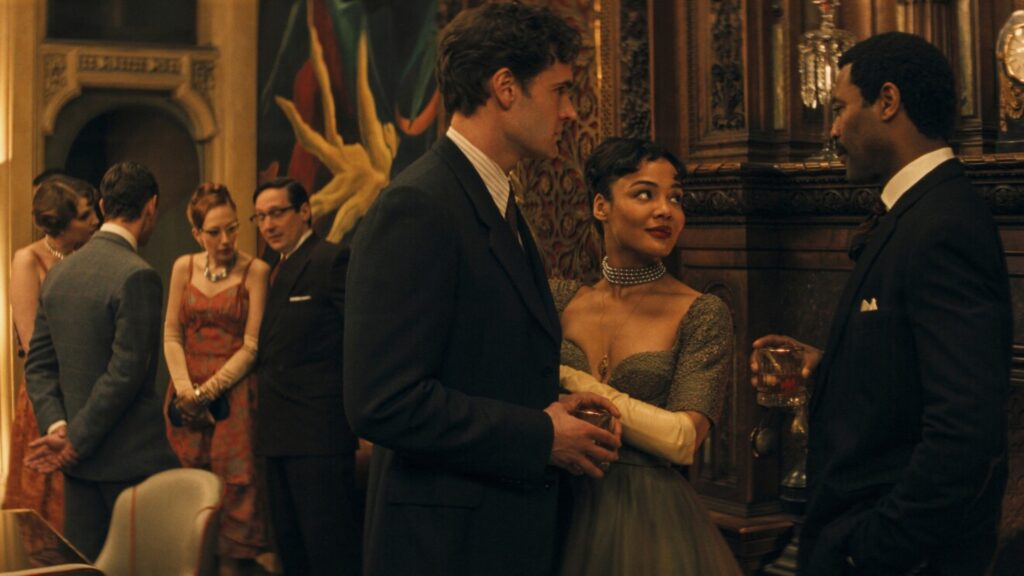
Hedda unfolds primarily over a single, charged evening at the sprawling country estate of newlyweds Hedda Gabler (Tessa Thompson) and George Tesman (Tom Bateman) in early 1950s England. The couple has recently returned from their honeymoon, during which they accrued debt. George hopes a party — hosted for Professor Greenwood (Finbar Lynch) and his young wife Tabitha (Mirren Mack) — might advance his academic career and secure financial stability.
However, the arrival of Eileen Lovborg (Nina Hoss) — Hedda’s former lover — intensifies the evening’s emotional stakes. Reimagined as a woman in this adaptation (gender-swapped from Ibsen’s original male character), Eileen is a newly sober, intellectually ascendant writer whose presence threatens George’s ambitions and rekindles old tensions with Hedda.
Throughout the night, hidden desires, resentments, power plays, and subtle manipulations erupt among the guests, particularly as Hedda oscillates between boredom, jealousy, and a desire to exert control over her social and emotional environment. Her machinations expose fractures in relationships and challenge established expectations — both personal and societal.
The party, already an attempt to secure social and professional validation, becomes a crucible for Hedda’s psychological unraveling and the collision of ambition, love, reputation, and repression.
Themes Explored
Hedda is rich with thematic depth, energizing Ibsen’s classical concerns while infusing them with contemporary resonance:
Entrapment and Agency
At its core, the story is about a woman constrained — by marriage, expectation, gender roles, and her own restlessness. Hedda’s struggle isn’t just external; it’s internal, making us question how much autonomy one can truly have within societal bounds.
Desire and Manipulation
Hedda’s flirtations, contradictions, and strategic provocations offer a portrait of someone who wields manipulation as a way to feel power in an otherwise confining world. This is especially vivid in her interactions with Eileen and Thea Clifton, whose own ambitions and relationships complicate the evening.
Gender, Identity, and Freedom
DaCosta’s queer inflection — particularly in Hedda and Eileen’s past relationship — reframes the narrative in terms of gendered desires and frustrated autonomy, pushing the classic text into conversation with mid-20th-century social mores.
Expectation vs. Reality
George’s well-meaning but unremarkable ambitions contrast sharply with Hedda’s restless yearning for something more dramatic, while the other guests reflect various degrees of conformity and rebellion — all simmering beneath polite conversation.
Style, Direction & Craft
Nia DaCosta’s direction balances respect for Ibsen’s core psychological drama with cinematic flair: lush period design, expressive cinematography by Sean Bobbitt, and a carefully tuned score by Hildur Guðnadóttir give the film both texture and emotional propulsion.
Critics have praised the movie’s dense yet elegant staging, and how it expands Ibsen’s chamber pot drama into a visually rich, emotionally charged world where every glance and dialogue beat carries weight.
DaCosta’s reimagination — from relocating the story to 1950s England to embracing a queer reading of key relationships — deepens the thematic impact without losing the tragic core of the original play.
Performance Highlights.
Tessa Thompson is central, giving what many critics call a commanding, complex performance as Hedda — poised, enigmatic, and terrifyingly unpredictable in her emotional roulette.
Nina Hoss as Eileen Lovborg delivers a magnetic portrayal that accentuates the story’s emotional stakes and provides a powerful counterpoint to Hedda’s icy composure.
Imogen Poots and Tom Bateman work well as supporting foils, with Thea Clifton’s youthful independence and George Tesman’s earnestness both amplifying Hedda’s sense of dissatisfaction and potency.
Critical Reception & Audience Response.
On Rotten Tomatoes, Hedda holds a strong ~89–91% Tomatometer rating, with many critics celebrating the bold update and Thompson’s performance.
Critics describe the film as a sultry period piece with “a commanding turn” from Thompson and a sharp reframing of timeless themes of repression, desire, and control.
Audience reactions vary: some praise the acting and production design, while others find its pacing slow or its structure challenging without familiarity with the original play.
Why Hedda Matters
Art-House Prestige with Streaming Reach
While its theatrical box office was tiny, the film’s streaming success on Prime Video and festival buzz give it a cultural reach far beyond those numbers.
A Classic Reimagined with Courage
This isn’t merely a faithful adaptation — it’s a creative reinvention that brings Ibsen’s psychological insight into striking new cultural territory.
Performance-First Cinema
Tessa Thompson’s portrayal has earned widespread acclaim and awards buzz, anchoring a film that depends on nuance, restraint, and unexpected emotional explosions.
LGBTQ+ Thematic Expansion
By centering queer history within a period context, the film opens new avenues for understanding classic material and broadens its relevance to contemporary viewers.
Visual & Emotional Craft
The production design, score, and cinematography work together to elevate what could have been a static chamber piece into a cinematic experience that feels alive, sensual, and charged.
Final Thoughts.
Hedda (2025) isn’t just another stage-to-screen adaptation; it’s a bold, nuanced, and deeply performative examination of a woman caught between desire and confinement, agency and despair, tradition and rebellion. Director Nia DaCosta brings a contemporary pulse to a century-old story, anchored by Tessa Thompson’s electrifying central performance and supported by a smartly chosen ensemble that elevates every scene.
If you appreciate films that prioritize psychological depth, character complexity, and thematic richness, Hedda is an essential watch — a cinematic event that takes a classic text and makes it feel urgently alive and unmistakably now.