


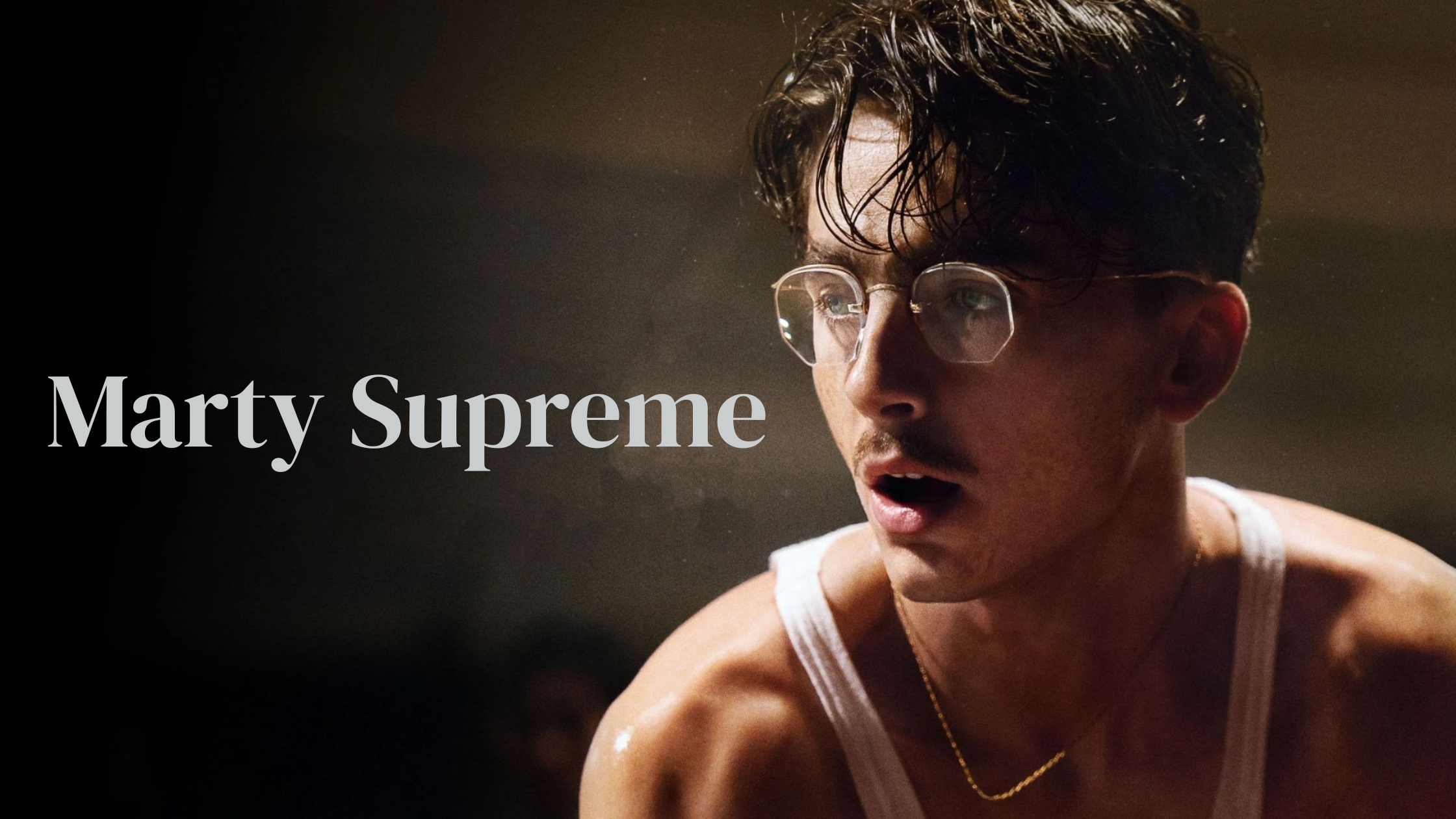
Marty Supreme — A Table Tennis Odyssey with Heart and Hustle.
Marty Supreme (2025) is one of the standout films of the year — a sports comedy-drama that defies expectations, blending frenetic style, emotional depth, gritty period detail and the trademark Safdie-esque energy into a story about ambition, identity and the relentless pursuit of greatness. Directed by Josh Safdie and co-written with Ronald Bronstein, the film is inspired loosely by the life and memoir of real-world ping-pong legend Marty Reisman, though it takes creative liberties to craft a cinematic character that feels both mythic and painfully human.
Released in the U.S. on December 25, 2025 by A24, Marty Supreme quickly became not just a critical darling but also a box office milestone for its distributor, earning acclaim, awards attention and a fervent fanbase — even as it divided some viewers with its chaotic narrative style.
How Many Cast — Who’s in the Movie.
Marty Supreme centers on a relatively compact but powerful ensemble cast, anchored by some of Hollywood’s most interesting talents alongside noteworthy supporting performances.
Principal Cast
- Timothée Chalamet as Marty Mauser – a young, audacious table tennis player striving for greatness.
- Gwyneth Paltrow – playing a significant supporting role, offering emotional and narrative counterpoints to Marty’s journey.
- Odessa A’zion – a key supporting character, recognized with award nominations for her performance.
- Kevin O’Leary – adding texture to the world around Marty.
- Tyler, the Creator (Tyler Okonma) – brings unique energy to his role.
- Abel Ferrara – contributing to the film’s gritty, lived-in atmosphere.
- Fran Drescher – appearing in a memorable supporting role.
Notable Cameos & Easter Eggs
- Robert Pattinson provides a secret voice cameo as a voice commentator/umpire during a British Open ping-pong match — a hidden “Easter egg” that reflects Safdie’s playful approach to world-building.
All told, the film’s gallery of characters — from rivals and mentors to romantic interests and hustlers — shapes Marty’s chaotic, unpredictable ascent. But the core cast remains focused around a tight group of players, giving the movie both emotional focus and kinetic ensemble energy.
Who Is the “Means” (Main) Character?
Without question, the central figure — the emotional and narrative engine — of Marty Supreme is Marty Mauser, portrayed by Timothée Chalamet.
Marty is presented as a volatile, ambitious, charismatic and deeply flawed young man who — in the gritty world of 1950s New York — chases a dream that few take seriously: becoming a world-champion table tennis player. Unlike a typical sports biopic hero, Marty is not purely likable; he’s angry, reckless, competitive, self-destructive and constantly at odds with authority, convention and, often, his own psyche.
Chalamet’s performance has been widely praised, with critics calling it career-defining and infectiously charismatic, and awarding him honors including a Golden Globe Award and Critics’ Choice Award — along with major awards season nominations.
What makes Marty truly compelling as the means character is not just his skill or ambition, but his internal contradictions — a man driven by obsessive ambition, plagued by self-doubt, and shaped by a restless pursuit of identity beyond the mundane life he rejects. His emotional arc — from an outsider with little respect for the ordinary, to someone who confronts his own limitations and deeper yearnings — is the beating heart of the Marty Supreme film.
Box Office (“Box Collection”) — How Much It Made.
Commercially, Marty Supreme has been a significant success, especially for an art-house distributor like A24. Its performance shows that independent films with strong storytelling and star power can still break out in theaters.
Box Office Highlights
- Worldwide Gross: ~$120 + million globally, crossing the $100 million milestone — a rare feat for indie cinema releases.
- Domestic U.S. Box Office: ~$90 + million, making it A24’s highest-grossing film domestically ever, surpassing even Everything Everywhere All at Once.
- Holiday Opening: The film opened strongly over the Christmas weekend, earning a notable $27 million in its extended holiday opening frame.
Although some discussion persists in industry circles about profitability — especially accounting for marketing and exhibition costs — there’s no question Marty Supreme has become one of the most financially visible independent films of the year and a major box-office story in 2025-26.

The Niche — Who This Movie Is For.
Marty Supreme doesn’t fit neatly into a single genre category — and that’s part of its appeal. It’s a sports drama at heart, but it’s also a comedy of errors, character odyssey, period piece and existential pursuit of self. Its niche touches several audience segments:
Sports Lovers
Even though it focuses on table tennis — a sport often overlooked in film — the movie captures the rhythm, strategy and kinetic energy of competition in ways that resonate not just with fans of sport, but with anyone who appreciates a well-executed athletic narrative thread.
Character-Driven Cinema Fans
The film is driven by character over spectacle, with Marty’s internal conflicts, impulses and contradictions offering fertile ground for emotional engagement — especially for viewers drawn to stories about flawed, complex protagonists.
Fans of Auteur Filmmaking
Josh Safdie’s direction — energetic, unorthodox, visceral and stylistically bold — will appeal to cinephiles who enjoy movies that feel lived-in and emotionally raw. His evolution from indie thrillers to a more expansive period portrait showcases his range as a creator.
Awards Season Viewers
With its critical acclaim, awards nominations (including multiple Oscar and BAFTA nods), and Chalamet’s standout performance, the film draws ample attention from awards watchers and art-house audiences alike.
General Audiences Seeking Story Depth
Beyond genre boundaries, many audience members are discovering Marty Supreme for its emotional beats, narrative unpredictability and relentless pursuit-of-self story — making it both accessible and resonant for a broad spectrum of viewers.
Deep Dive — Story, Themes, Style, and Impact.
Plot Overview (Without Major Spoilers)
Set against the gritty, neon-lit backdrop of 1950s New York, Marty Supreme follows Marty Mauser, a charismatic but volatile young man whose dreams far exceed expectations for the future that others have laid out for him. Though expected by friends or family to settle into a stable career — perhaps taking over a shoe store or leading a conventional life — Marty instead chooses a path no one else respects: becoming a champion table tennis player.
His journey takes him from dingy basement clubs to the international international table tennis circuit, intersecting with colorful rivals, gritty hustlers, skeptical organizers, and potential loves. The narrative is episodic and kinetic, much like the sport at its center — darting between humor, tension, failure and hard-earned victories.
Unlike many sports narratives that hinge on an ultimate victory or championship moment, Marty Supreme is more concerned with the process, the choices Marty makes, and the ways in which his ambition both elevates and isolates him. A key throughline — underscored in interviews and reviews — is that the story isn’t merely about winning but about chasing a dream with ruthless dedication.
Key Themes Explored.
Relentless Ambition vs. Self-Destruction
Marty’s drive isn’t neatly heroic; it’s part passion, part fixation, and part self-negation. The film interrogates how ambition can be both inspiring and toxic, pulling us toward greatness while eroding personal relationships and emotional balance.
Identity and Self-Worth
Marty constantly asks: Who am I beyond what others expect of me? His identity isn’t just tied to wins and losses but to how he defines himself in a world that wants easy answers and tidy success.
Community, Love, and Isolation
Throughout his rise, Marty’s relationships — with mentors, rivals and love interests — shape his emotional landscape. The story tracks not just wins on the table, but how interpersonal bonds support or test him.
The American Dream and Outsider Status
The film’s period setting evokes classic mid-20th century American narratives — but instead of baseball or boxing, the game is ping-pong. In doing so, it reframes the familiar trope of striving for success in an America full of contradiction and possibility.
Style and Direction.
Josh Safdie — known for visceral, kinetic filmmaking — brings that same energy to Marty Supreme, but channels it through a period lens that feels both nostalgic and urgent. His choice to shoot on 35 mm film stock gives the visuals a rich, tangible texture that aligns with the tactile nature of the era and the sport.
Cinematographer Darius Khondji lends the film a striking visual palette — blending gritty club interiors with sweeping competition arenas — while composer Daniel Lopatin punctuates the story with a jazzy, rhythmic score that mirrors the pulse of Marty’s journey.
This combination of period detail, kinetic editing and character-oriented direction helps the film feel like both a time capsule and a universal story of striving beyond limits.
Critical and Audience Reception.
Marty Supreme has been widely praised by critics and increasingly embraced by audiences:
- Rotten Tomatoes: A 94% Tomatometer score reflects critical acclaim for its storytelling, direction and Chalamet’s performance.
- Audience Scores: Verified audience feedback shows strong appreciation, with many highlighting its energy and emotional payoff.
- Major institutions like the National Board of Review and the American Film Institute named it among the top ten films of the year.
It earned multiple awards nominations, including nine Oscar nods (Best Picture, Best Director, Best Actor and more), and numerous BAFTA and Golden Globe nominations — with Chalamet’s performance singled out as one of his best to date.
This breadth of recognition — from indie awards to major industry institutions — speaks to the film’s resonance beyond sports drama, establishing it as a standout of 2025 cinema.
Final Thoughts.
Marty Supreme is more than a period sports film — it’s a propulsive, ineffably human story about an outsider who refuses to respect limits, even when the game around him seems absurd. Anchored by Timothée Chalamet’s dynamic performance and Josh Safdie’s vivid direction, it blends sport, identity, ambition and emotional complexity into a film that feels both timeless and urgently of its era.
Whether you watch for the kinetic table tennis sequences, the layered character drama, the 1950s period energy or the storytelling that challenges traditional sports biopic tropes, Marty Supreme delivers an unforgettable ride — and establishes itself as one of 2025’s most compelling films.