


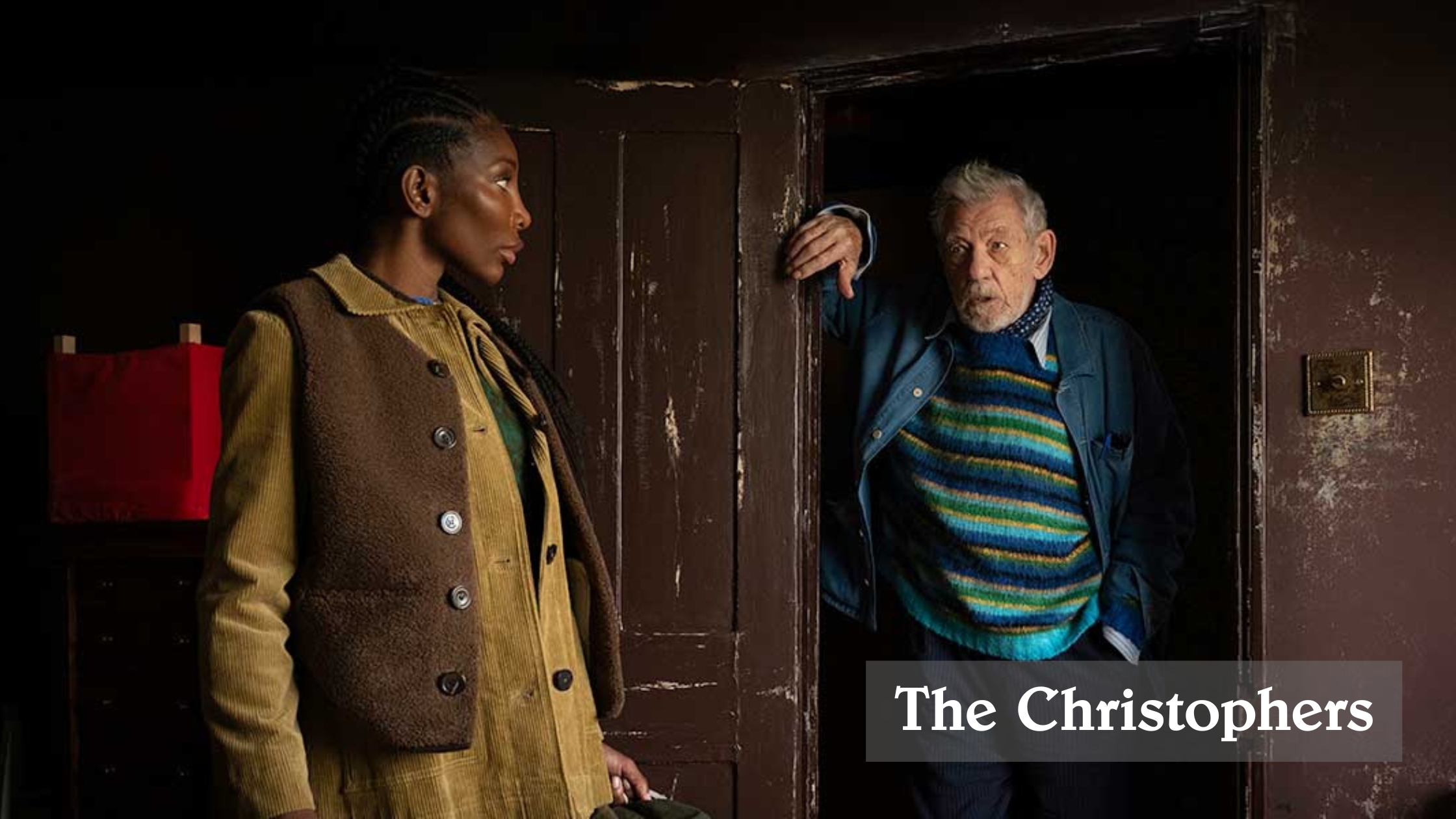
The Christophers — A Darkly Elegant Art-Fraud Drama.
The Christophers is a 2025 black-comedy / drama from director Steven Soderbergh, written by Ed Solomon, that navigates the morally ambiguous world of art, legacy, and deception. It premiered at the Toronto International Film Festival in September 2025.
At its heart, the film is a compact, character-driven chamber piece: the estranged children of a once-famous artist hire a forger to finish his incomplete paintings, with the aim of profiting from them after his death.
Cast — How Many, and Who Are the Key Players.
Principal Cast:
- Ian McKellen as Julian Sklar, the aging, once-celebrated painter whose unfinished works are central to the plot.
- Michaela Coel as Lori Butler, an art restorer and forger, employed to complete the artist’s abandoned “Christophers” series.
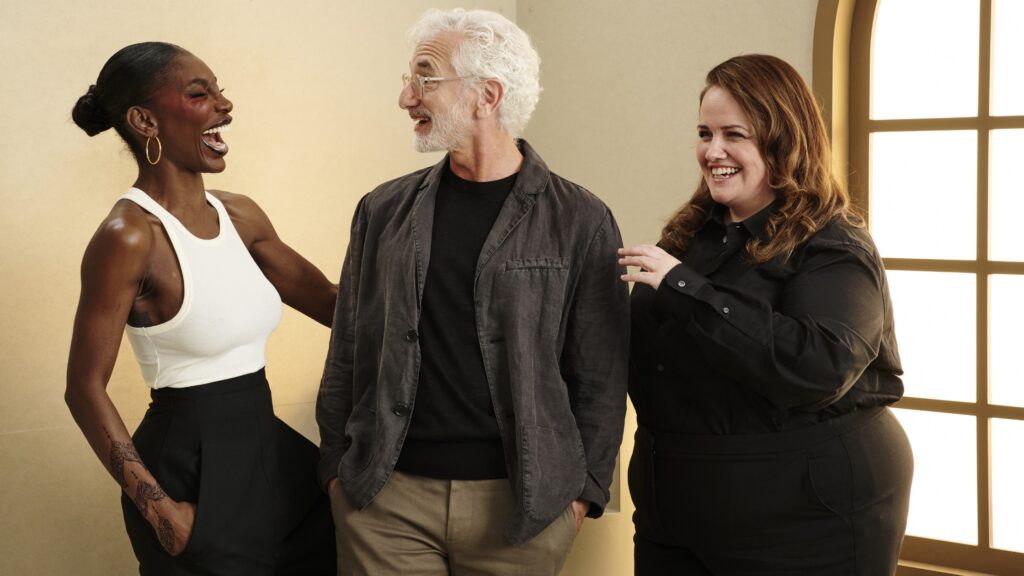
- James Corden as Barnaby Sklar, one of Julian’s estranged children.
- Jessica Gunning as Sallie Sklar, Julian’s other child, also complicit in the plan.
Supporting / Extended Cast: According to Metacritic, there are a number of smaller roles: e.g., Dmitri Prokopiev (Food Truck Patron), Tilly Botsford (Esme), Daniel Fearn (Locksmith), Lucy McCormick, etc.
MovieMeter lists a somewhat lean cast, focused more on these four plus a few peripheral players.
In short: while the total credited cast is more than just four, The Christophers is definitely focused on a small ensemble — about 4–6 main characters, with a handful of peripheral ones.
Who Is the Main Character / “Means” Character.
The film is structured around Julian Sklar (Ian McKellen) and Lori Butler (Michaela Coel), but if one must pick a “means character” — the character through whom most of the story’s moral and emotional weight is carried — it’s Lori. She is hired to forge the paintings, and her motivations, ethics, and transformation are central to what unfolds.
However, Julian Sklar is equally crucial: he represents legacy, artistic failure, and the consequences of a brilliant but flawed life. His estranged children (Barnaby and Sallie) fuel the external conflict, but the emotional core lies in the triangular relationship between Julian, Lori, and his legacy. The story is as much about Lori’s journey (as a forger) as it is about Julian’s reckoning and the children’s greed / regret.
Box Collection / Box Office Performance.
As of now, there are no publicly reported box-office grosses for The Christophers. Key reasons:
- The film just premiered at TIFF (September 2025).
- Neon has acquired distribution rights and plans a U.S. theatrical release in 2026.
- Because it is still in the festival / pre-release phase, box-office trackers have not listed concrete earnings. (No wide-release grosses are yet available.)
Therefore: box collection is not available yet, and the financial picture will only take shape once the film is theatrically released and box-office reporting begins.
Niche / Genre — What Type of Movie Is This, and Who Is It For.
Genre / Niche:
- The Christophers is best described as a dark comedy-drama: morally ambiguous, intellectually sharp, and emotionally rich.
- It’s also a chamber piece — much of its drama seems to come from close interpersonal confrontation rather than large-scale set pieces. Several reviews note its talky, intimate style.
- The plot revolves around art fraud / forgery, which gives it a niche appeal to people interested in the art world, legacy, morality, and deception.
- Thematically, it touches on aging, inheritance, identity, and how art — especially unfinished art — can carry value beyond its aesthetic worth.
Audience / Target Viewers:
- Cinephiles who enjoy intellectual dramas with wit and moral complexity.
- Fans of Steven Soderbergh who appreciate his later-career, smaller-scale, character-driven films.
- Viewers interested in art-world stories — especially those that examine legacy, authenticity, and creative failure.
- People who like chamber films — cinema that relies on dialogue, performance, and psychological depth rather than spectacle.
- Those who enjoy dark comedies rather than purely serious dramas; the film balances emotional weight with comedic undertones.
What Makes It Distinct:
- The combination of Soderbergh’s direction (lean, clever, character-focused) with Ed Solomon’s screenplay (smart, morally layered) gives it a refined texture.
- The central forger character (Lori) is not just a plot device — she’s a deeply drawn figure whose moral choices matter.
- The presence of Ian McKellen as a once-great painter adds extra gravitas and pathos to the legacy theme.
- The interplay of deception, family, and art is handled not as a thriller, but as a meditation — this makes the film feel grown-up, reflective, and morally probing.
Deep Dive: Story, Themes, Execution, Strengths & Critiques.
Story / Plot Overview
The Christophers opens in the life of Julian Sklar, a once-renowned painter whose “Christophers” series of portraits has never been completed. In his later years, he’s isolated, financially strained, and disconnected from his estranged children, Barnaby (James Corden) and Sallie (Jessica Gunning).
Barnaby and Sallie, desperate for their inheritance, hatch a scheme: they approach Lori Butler, an art restorer and forger, and commission her to finish the incomplete Christophers paintings. The idea is that, once completed, they can “discover” them and sell them profitably — but things are not as straightforward as they seem.
Lori, whose own life is complicated (she works a food truck in addition to restoring art), infiltrates Julian’s world under the guise of being his assistant. She must navigate her deception, her growing relationship with Julian, and the siblings’ greed. As she works on the paintings, emotional and ethical lines blur. What begins as a financial con becomes deeply personal.
The The Christophers film builds tension not just around the forgery, but around legacy: what Julian has left behind, how his children view him, and what Lori’s true intentions are. In classic Soderbergh style, dialogue, quiet scenes, and morally ambiguous choices form the core.
Themes
- Legacy & Inheritance
The Christophers themselves are a symbol of what Julian’s life means: unfinished art, unfulfilled ambitions, and the children’s desire to claim more than just money — they want his legacy. - Authenticity vs. Deception
The ethical heart of the film lies in the forgery: Lori’s skill is genuine, but the act is deceitful. The movie asks whether art’s value lies in its origin, its authenticity, or its image. - Aging & Regret
Julian represents an older generation of greatness, now overshadowed by time. His reconciliation (or lack of) with his children, and his acceptance of his decline, form a melancholic core. - Family & Moral Compromise
Barnaby and Sallie’s desperation drives them to wrongdoing, raising questions of how far one will go for money, but also how family ties can corrupt or heal. - Power of Art
For Julian, art is not just a commodity — it’s identity. For Lori, it’s a craft, and for his children, a ticket to fortune. The Christophers paintings become a kind of moral testbed.
Direction & Screenplay
- Steven Soderbergh, known for his versatility and intelligence, brings a restrained but emotionally rich approach. Critics describe the film as “talky, at times incredibly funny” with existential undertones.
- Ed Solomon’s screenplay (he has worked with Soderbergh before) is sharp, philosophical, and sly. The dialogue doesn’t feel showy — rather, it probes greed, guilt, ambition, and art-world hypocrisy.
- Cinematographically, because this is more of a character / art-world drama than action, Soderbergh likely uses intimate framing, quiet spaces (Julian’s studio, the children’s home) to underline character emotion and moral tension.
Performances
- Ian McKellen gives a standout performance as Julian Sklar. Reviews call his performance “superbly crotchety” and emotionally resonant.
- Michaela Coel as Lori balances cunning, vulnerability, and moral complexity. Her journey as a forger is not just professional but personal. Critics have praised how she holds her own opposite McKellen.
- James Corden and Jessica Gunning, playing the children, provide the familial contrast: ambition, entitlement, and a haunted longing for recognition. While their characters may not be as deeply drawn as Julian or Lori, they spark the central conflict.
Tone & Pacing
The tone is intellectual but accessible: smarter than a mainstream comedy, but not as cold or abstract as an arthouse puzzle film. According to reviews, it’s emotionally warm in parts, darkly humorous in others.
Pacing leans toward the methodical: scenes are allowed to breathe, conversations matter, and the tension of deception builds slowly rather than through violent shocks or big set-pieces.
Critical Reception
- On Rotten Tomatoes, the film boasts a 97% critic score (as of latest reports), with praise for its acting, writing, and emotional depth.
- On Metacritic, the movie has a “Generally Favorable” rating (~73) from critics, indicating a strong reception for its intelligence, performances, and layered storytelling.
- Critics highlight the central dynamic between McKellen and Coel as a major strength, calling the film “a work of art in its own right.”
- Some reviews note that side characters (especially the children) may feel less fleshed-out, but overall, critics seem to agree that the film is emotionally and intellectually satisfying.
Strengths & Weaknesses.
Strengths:
- Performances: McKellen and Coel anchor the film with gravitas and emotional nuance.
- Writing: Solomon’s script blends moral complexity with wit, avoiding cheap clichés.
- Direction: Soderbergh’s subtle hand maintains tension and character focus without unnecessary flash.
- Artistic Premise: The idea of a family using a forger opens thematic doors into legacy, authenticity, and moral compromise.
- Chamber Feel: Because the film is intimate, it allows for rich character studies rather than spectacle — ideal for viewers who love character drama.
Weaknesses / Risks:
- The limited scale might limit its commercial appeal; it’s not a blockbuster.
- Some may find its pacing slow or “too talky” — not ideal for audiences expecting high drama or action.
- The side characters (especially the children) might feel underdeveloped to some, which could weaken the emotional impact of their scheme.
- Because the scheme is morally ambiguous but not necessarily high-risk in a thriller sense, the tension may feel more internal than external, which may not appeal to viewers who prefer more overt conflict.
Why The Christophers Matters
- Soderbergh’s Evolution: This film represents a continuation of Soderbergh’s late-career shift toward smaller, more contemplative films. It reflects his willingness to explore moral, artistic, and personal themes rather than big-budget spectacle.
- Art & Legacy in Cinema: The movie contributes to a lineage of films about art fraud, but it does so in a way that is deeply character-centered. It asks not just whether you can fake art, but whether legacy itself is a forgery in some sense.
- Strong Actor Showcase: With McKellen and Coel at the center, the film becomes a showcase for mature, complex performances — not just youthful ambition.
- Moral Ambiguity & Human Complexity: The Christophers doesn’t hand out easy moral verdicts. It allows its characters to be flawed, conflicted, and deeply human.
Final Thoughts.
The Christophers is a rich, thoughtful film — a mix of black comedy and dramatic tension — that explores what it means to leave something behind: in art, in family, in reputation. Steven Soderbergh’s direction, combined with Ed Solomon’s elegant script, offers a smart, character-driven meditation on legacy and deception.
If you enjoy films about the art world, moral compromise, aging creatives, or carefully crafted heist-like schemes (even if they’re more emotional than criminal), The Christophers is likely to resonate. It’s not a movie about action, but about ideas; not about spectacle, but about character; not about thrills, but about quiet, deeply personal reckonings.
Because the film hasn’t yet released wide, box-office numbers remain unreported — but with critical acclaim and a major distributor (Neon) on board, this is shaping up to be one of Soderbergh’s more quietly powerful late-career works.