


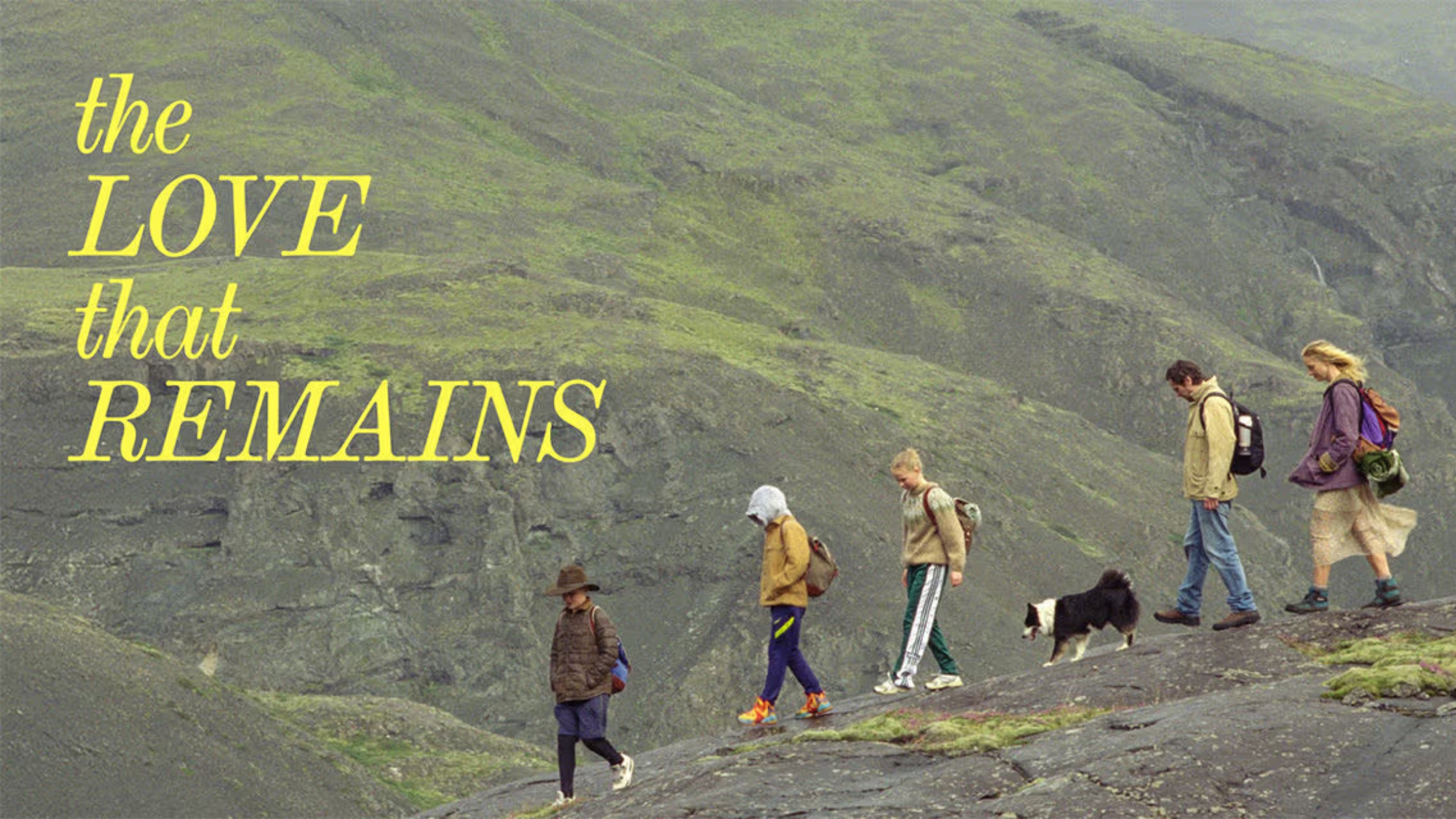
The Love That Remains — A Tender Icelandic Portrait of Love, Separation and Memory.
The Love That Remains (original Icelandic title Ástin sem eftir er) is a 2025 international art-house comedy-drama from acclaimed Icelandic filmmaker Hlynur Pálmason. Known for his thoughtful, deeply human storytelling in films such as Godland and A White, White Day, Pálmason offers audiences an intimate, gentle, and emotionally layered film about family, love and the shared experiences that both bind and fracture relationships.
Premiering in the Cannes Premiere section at the 2025 Cannes Film Festival and later showing at other major festivals including the Toronto International Film Festival and New York Film Festival, the film has drawn attention for its delicate framing of real-life emotions and its evocative visual language.
Cast — Who’s in the Movie (How Many Cast).
The Love That Remains features a modest but impactful cast, grounded in performance and naturalistic interaction rather than star-driven spectacle. The credited cast with significant roles includes roughly 8–10 performers, each contributing to the film’s deeply personal feel:
Principal Cast
- Saga Garðarsdóttir as Anna — the artist mother whose emotional journey anchors the story.
- Sverrir Guðnason as Magnús — the fisherman father, present and absent, whose relationship with Anna defines much of the film’s tension.
- Ída Mekkín Hlynsdóttir as Ída — the couple’s daughter, who experiences the family’s turbulence up close.
- Þorgils Hlynsson — one of Anna and Magnús’s sons.
- Grímur Hlynsson — another child in the family.
Supporting and Additional Cast
Other performances include actors such as Ingvar Eggert Sigurðsson, Anders Mossling, Katla M. Þorgeirsdóttir, Halldór Laxness Halldórsson and others who appear in community and familial scenes that enrich the film’s milieu.
The cast also features an uncredited but memorable presence from the family’s sheepdog, Panda, whose presence won the Palm Dog Award at Cannes — a playful acknowledgment of animal performances at the festival.
Who Is the “Means” (Main) Character?
The Love That Remains is a true ensemble family drama, but the emotional and narrative heart of the film is Anna, portrayed by Saga Garðarsdóttir.
Anna — The Emotional Core
Anna, an artist and mother navigating the complexities of marital separation and personal identity, functions as the film’s “means” character — the central figure through whom audiences process the story’s emotional rhythms. Her relationship with her husband Magnús, her role as a parent, and her interior struggle between memory and acceptance form the thematic backbone of the film.
Although Magnús’s perspective and the children’s experiences enrich the narrative, it is Anna’s internal world, artistic impulse and emotional reckoning that carries much of the film’s weight. The camera lingers on her gestures, gazes, silences and small improvisations, inviting the audience to inhabit her emotional geography.
Box Office (“Box Collection”) — What It Made.
As a festival-driven art film rather than a commercial theatrical release aimed at mainstream audiences, The Love That Remains had a limited box-office run, reflecting the niche, independent nature of the project.
According to box-office tracking:
- Worldwide Gross: approximately $252,563 — a modest total typical of limited-release arthouse films.
- Domestic/International Split: The film earned in small markets including Iceland and parts of Europe, with roughly 78% of its total outside North America.
- In the U.S., limited engagement totals were under $25,000, reflecting its very restricted theatrical presence.
While these figures may seem small compared with big studio productions, they’re consistent with the commercial expectations for festival films and international dramas that primarily reach audiences through art houses, festivals and later streaming or home video channels.
The Niche — Who This Movie Is For.
The Love That Remains occupies a very specific niche within cinema:
Art-House and International Film Fans
The Love That Remains film’s pacing, visual texture, emotional subtlety and emphasis on character over plot speak directly to audiences who follow international cinema and festival films. Its presence at Cannes, TIFF and NYFF cements its status in this category.
Character-Driven Family Drama Enthusiasts
Unlike conventional dramas with clear narrative arcs, this The Love That Remains film thrives on vignettes and mood, presenting intimate glimpses into a family’s life without dramatic peaks — a style appealing to viewers who appreciate reflective, slow-burn emotional storytelling.
Fans of Poetic, Visually Rich Films
Director Hlynur Pálmason is known for lush imagery, contemplative pacing, and a deeply humanist approach — qualities that resonate with people who enjoy films as visual essays on emotion and existence.
Cinephiles Curious About Festival Accolades
The unique distinction of the film’s canine star winning the Palm Dog Award draws a kind of quirky cinephile interest, especially for those who follow festival culture and its more whimsical awards.
Overall, the niche is international, art-oriented, thoughtful audiences — not mass commercial crowds — which fits the film’s release strategy and stylistic ambitions.
Deep Details — Story, Themes, Style, and Execution.
Plot Overview (No Major Spoilers)
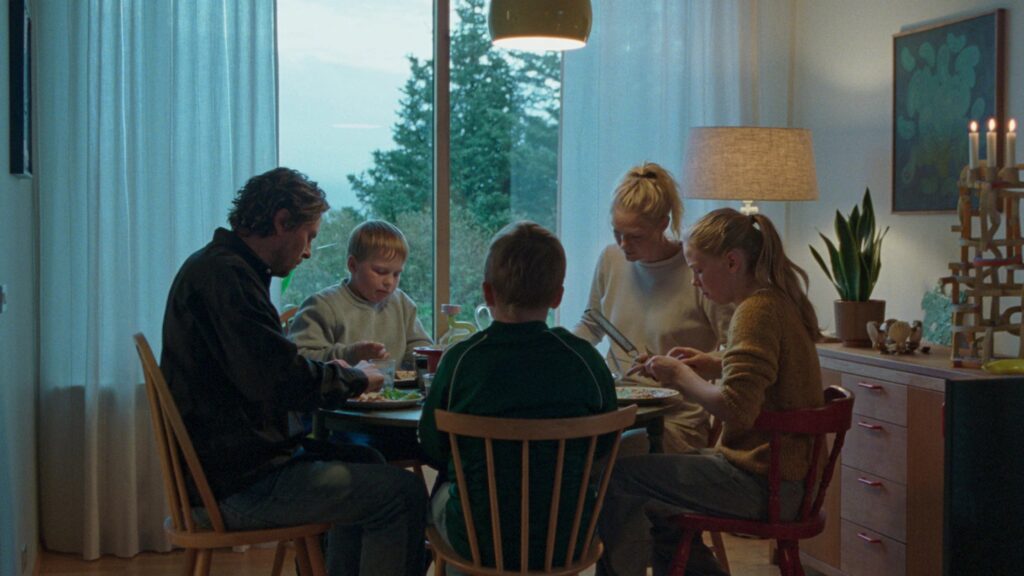
The Love That Remains is less a traditional narrative and more an emotional essay on family life, separation and persistence of love. Set across an entire year, it follows Anna and her fisherman husband Magnús as they navigate the slow dissolution of their marriage and its ripple effects on their three children: Ída, Grímur and Þorgils.
The story unfolds in quiet, vignette-like sequences that drift between domestic moments — a day in the garden, a family meal, phone calls — and surreal or poetic touches that underscore the bittersweet theme of separation and attachment. The backdrop of Iceland’s dramatic landscapes — wind-swept fields, reflective waters and stark skies — becomes an emotional correlate to the family’s inner states.
Magnús — often absent due to his work at sea — appears intermittently, at times like a guest in the home he once anchored. Anna, who has lost her art studio, turns to the wild surroundings as a new space for creative expression, canvases interacting with natural elements like dirt, rust and wind. These visual choices symbolize the erosion, reconstruction and impermanence of relationships.
Rather than offering conflict and resolution in clear dramatic arcs, The Love That Remains film cherishes moments of tenderness, odd humor and reflective quiet, allowing audiences to feel the contours of a life splitting yet still bound by memory, love and shared experience.
Key Themes Explored
Several themes ripple through The Love That Remains, often without direct exposition but felt deeply through imagery and performance:
The Persistence of Love
Even in separation, love doesn’t simply vanish. The Love That Remains film depicts love as something that remains in gestures, shared histories and lingering presence — much like its title suggests.
Memory and Shared Experience
The fractured family members carry memories of happier times. These recollections shape their actions and the film’s emotional tone, suggesting that past love continues to influence present behavior.
Loss and Renewal Through Nature
Iceland’s landscapes — elemental and evocative — serve as metaphors for loss, resilience and renewal. Anna’s improvised outdoor canvases attest to how art and life intersect in unexpected ways.
Playfulness Amid Pain
Though the subject matter is weighty, Pálmason infuses gentle humor, surreal images and absurd moments, creating a tone that is melancholic but not bleak, fragile but occasionally buoyant.
Visual Style and Direction
Hlynur Pálmason’s directorial signature is evident throughout — a blend of observational realism, lyrical composition, poetic pacing and visual imagination. The choice to shoot on 35mm film and in a nearly square aspect ratio lends the film a painterly quality, as if each frame could exist as a standalone work of visual poetry.
Cinematography — also by Pálmason — is unhurried, favoring long takes, natural light and environmental textures that echo the characters’ internal rhythms. The editing is gently elliptical, emphasizing mood over momentum, while the score by Harry Hunt underscores the film’s melancholic yet hopeful feel.
Critical and Audience Reception.
Critics have largely praised the film’s emotional sensitivity and visual beauty. On Rotten Tomatoes, it holds a high approval rating (~94%), with reviewers noting its immersive portrayal of everyday love and separation, as well as its lyrical imagery.
Reviewers describe it as a film to “experience rather than consume” — one that rewards patience, attentive viewing and emotional openness. Its blend of tenderness, humor and quiet profundity situates it among the most distinctive dramas of the year.
Audience opinions vary more widely, as its slow pace and vignette structure demand a different kind of engagement than mainstream narratives. Some viewers appreciate its subtlety and humanism, while others find it fragmented or elusive.
Why The Love That Remains Matters.
- A Unique Family Portrait: The film doesn’t adjudicate between happiness and heartbreak — it portrays the messy space in between, capturing life as it actually feels.
- Artistic Vision: Hlynur Pálmason’s evolving cinematic voice offers something rare in contemporary film — a blend of visual poetry, emotional insight and humane storytelling.
- International Art Cinema Representation: Its presence at Cannes and other festivals, and its selection as Iceland’s Oscar entry, highlights how smaller national cinemas continue to contribute to global film culture.
- Visual and Emotional Currency: By privileging experience over exposition and mood over momentum, the film provides a model for contemplative, evocative cinema.
Final Thoughts.
The Love That Remains may not be a blockbuster in the traditional sense, but it stands as a deeply affecting, beautifully composed meditation on family, love and separation. Its limited box office figures reflect its art-house positioning, yet its artistic impact — in visuals, mood and emotional resonance — places it among the most intriguing cinematic experiences of the year.
If you’re drawn to films that reward reflection, linger in memory and explore life’s subtleties with grace and honesty, The Love That Remains offers a rare and unforgettable cinematic embrace.