


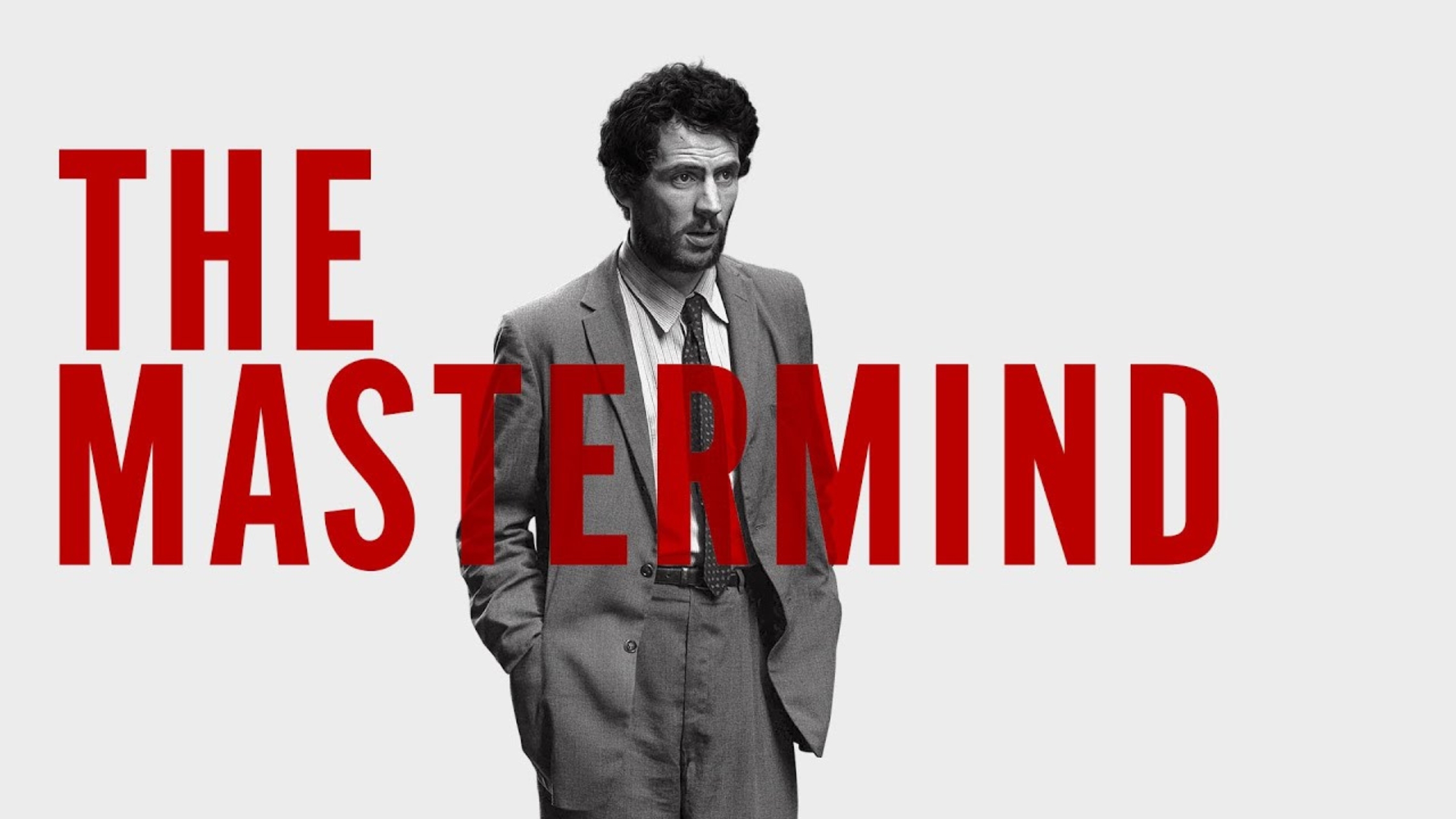
The Mastermind — A Quietly Subversive Heist and Character Study.
The Mastermind is one of the most intriguing and thoughtful films of 2025 — a crime drama that uses a seemingly straightforward heist setup to explore character, aspiration, and unfulfilled ambition against the backdrop of 1970s America. Written and directed by Kelly Reichardt, known for her quietly powerful films (Old Joy, Night Moves, First Cow), The Mastermind reinvents the heist genre with her trademark observational style, prioritizing character psychology and contextual nuance over thrill-ride spectacle.
Cast — How Many, and Who’s in It.
The Mastermind features a richly textured ensemble, but at its heart it is an actor-driven story focused on a handful of central performers.
Principal Cast
- Josh O’Connor as James Blaine “J.B.” Mooney, the struggling family man and amateur art thief at the center of the story
- Alana Haim as Terri Mooney, J.B.’s wife
- Hope Davis as Sarah Mooney, J.B.’s mother
- Bill Camp as Judge William Mooney, J.B.’s father
- John Magaro as Fred, J.B.’s art-school friend
- Gaby Hoffmann as Maude, Fred’s wife and J.B.’s friend
Supporting Actors
- Eli Gelb as Guy Hickey (one of the accomplices)
- Cole Doman as Larry Duffy
- Javion Allen as Ronnie Gibson
- Sterling and Jasper Thompson as J.B.’s sons Carl and Tommy, plus a handful of smaller roles like Amanda Plummer and Rhenzy Feliz that round out the cast.
In total, the film’s main credited ensemble is around 10–12 actors, with the narrative centered on the Mooney family and a handful of accomplices and friends who populate J.B.’s world.
Who is the “Means” (Main) Character?
The central figure of The Mastermind is J.B. Mooney (Josh O’Connor), whose first initials, initials often dropped in narration, hint at a mid-century attempt at grandiosity that is constantly undermined by reality. J.B. is a carpenter turned would-be art thief — a man whose dreams exceed his grasp, whose sense of self is tied up in proving he is more than a fraying suburban husband and father.
While the plot involves an ensemble who assist or complicate his plans, the emotional and narrative focus stays with J.B.: his impulsive decisions, his rationalizations after the theft, his strained relationships with his wife and friends, and the way his fantasy of escape crumbles into a tedious and draining flight from responsibility. The Mastermind is as much an internal portrait of this man’s fragility and delusion as it is a crime story — a hallmark of Reichardt’s approach.
Box Office (“Box Collection”) — What It Made.
The Mastermind is not a mainstream blockbuster, nor was it intended to be. Distributed by MUBI with a platform-theatrical release, its commercial results reflect its art-house positioning:
- Worldwide Gross: ~$1.47 million (Box Office Mojo)
- Domestic (U.S.) Gross: ~$1.10 million
- International Gross: ~$360 k–$640 k (various box office aggregators)
Because its release was limited (peaking at under 200 theaters), these figures are modest but expected for a slow-burn, character-focused film that prioritizes thematic depth over broad commercial thrills. Streaming deals — especially with MUBI’s global platform release in December 2025 — are likely where much of the film’s post-theatrical audience will emerge, consistent with how many specialty films today find their lasting viewership.
The Niche — Who This Movie Is For
The Mastermind fits squarely into a specific cinematic niche — one beloved by critics and cinephiles but often outside the radar of mainstream audiences.
Art-House / Slow Cinema
Fans of contemplative, character-driven cinema — where inner life and period texture matter more than plot mechanics — will appreciate Reichardt’s subdued pacing and attention to emotional detail.
Historical & Psychological Drama
Set in the 1970s, against the backdrop of Vietnam War protests, the film is not just a heist story but a socio-political portrait of America during a time of cultural upheaval. It speaks to viewers who enjoy films rooted in a particular era with historical texture.
Character Study Enthusiasts
This movie isn’t about fancy getaway scenes or slick crime fiction tropes; it deeply observes a flawed protagonist and the unraveling consequences of his choices. Audiences who like films that explore psychology, regret, and middle-class malaise will find The Mastermind especially rewarding.
Slow-Burn Heist Subversion
Reichardt uses the heist premise not for thrills but as a lens on mediocrity, delusion, and unintended consequences — a genre subversion appealing to viewers who like crime stories that rethink rather than replicate conventions.
In short: if you prefer cerebral, carefully paced films with richly drawn characters and a period atmosphere that feels lived-in (rather than stylized), The Mastermind is made for you.
Deep Details — Plot, Themes, Style, and Impact.
Plot Overview (Without Major Spoilers)
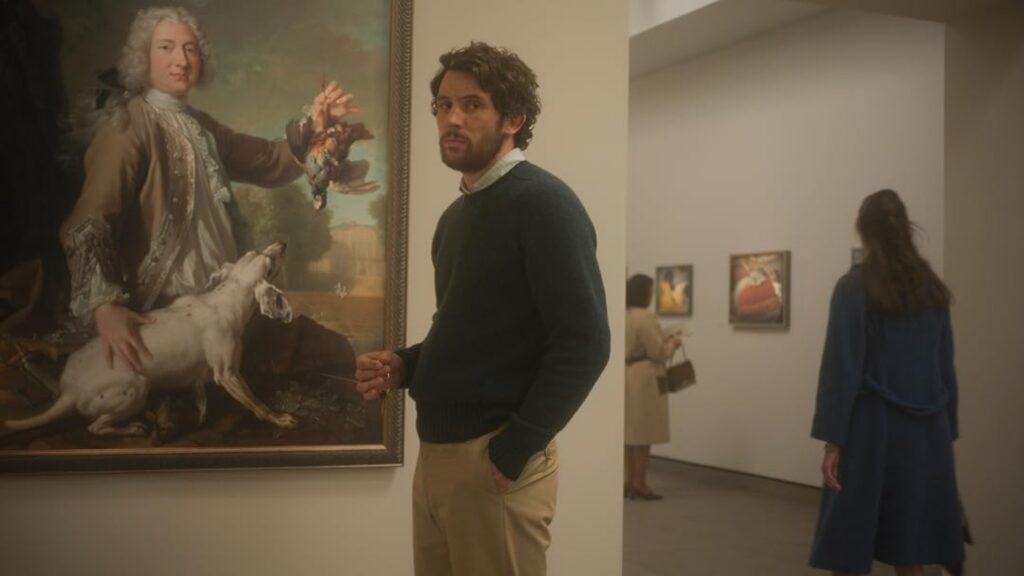
Set in 1970 Framingham, Massachusetts, The Mastermind introduces us to James Blaine “J.B.” Mooney, a man whose qualifications — genuine creativity, familiarity with art, and a restless frustration with his daily life — are constantly overshadowed by disappointment. Unemployed and restless, J.B. sees a way out of his rut in what seems like a classic caper: stealing four paintings by the American modernist Arthur Dove from the local art museum.
The story initially unfolds like a heist: J.B. recruits a pair of acquaintances to break into the museum and retrieve the artworks. But Reichardt quickly defies genre expectations: the robbery itself isn’t the focal point, nor is it a glamorous, meticulously executed masterpiece. The real story lies in what happens after — how J.B.’s carefully patched-together plan collapses into confusion, distrust, and increasingly desperate rationalization.
Once the stolen paintings are hidden, the heat turns up: one accomplice botches another robbery, implicating J.B., and suddenly his ordinary life — wife, children, suburban routine — becomes tangled with law enforcement suspicion, personal avoidance, and the unraveling of his own self-perception. What might look like a conventional crime story becomes a melancholic, sometimes wry study of a man who believes he can outsmart fate — and life.
Themes & Interpretive Depth
The Mastermind operates on several interwoven thematic layers:
The Folly of Individualism
At its core, Reichardt’s film is a critique of the fantasy that individual action — even criminal action — can liberate a man from his own mediocrity or dissatisfaction. J.B. imagines himself cunning and clever, but the narrative slowly exposes the gap between his self-image and reality.
Empty Dreams vs. Real Consequences
J.B.’s background as an art-school student lends the film a poetic contrast: artistic possibility versus mundane existence. His choice to steal art becomes symbolic — an attempt to claim meaning through transgression, but one that ultimately compounds his isolation and alienation.
Politics, Timing, and Context
Set amidst Vietnam War protests, the film subtly places personal malaise against national turmoil. The backdrop isn’t a gimmick — it parallels a society questioning authority, tradition, and purpose, mirroring J.B.’s own internal uncertainty.
Consequences Over Punchlines
Unlike typical heist films where tension culminates in escape or revenge, The Mastermind lingers on aftermath and consequence. The film digests disappointment as a theme, not just a plot device, forcing audiences to watch the psychological effect of failure rather than the adrenaline rush of success.
Style & Direction.
Kelly Reichardt’s direction is central to the film’s experience: she avoids flashy effects, opting instead for a meticulous, character-forward approach. Her visual language is reflective, often composed in long takes that allow actors to inhabit their moments with emotional subtlety. The cinematography by Christopher Blauvelt is lush in its period detail — autumnal New England, vintage cars, muted colors, and Midwest suburbia all contribute to the film’s lived-in atmosphere.
Reichardt’s pacing mirrors her thematic intent: nothing is rushed, each scene unfolds with deliberation, and the camera lingers on the quiet ambiguity of everyday life — turning ordinary moments into cinematic contemplation.
Performances That Define the Film.
Josh O’Connor as J.B. Mooney
O’Connor delivers a layered turn — charming yet erratic, hopeful yet self-deluding — making J.B. both sympathetic and frustrating. His performance is the emotional anchor, giving viewers an entry point into a character who could easily have been unlovable in lesser hands.
Alana Haim as Terri Mooney
Haim brings quiet strength and emotional subtlety to her role as J.B.’s wife — a woman both supportive and increasingly disillusioned by her husband’s choices.
Hope Davis and Bill Camp
As J.B.’s parents, they illuminate generational expectations and familial pressures, grounding the film’s portrayal of personal history and inherited challenges.
John Magaro and Gaby Hoffmann
As friends from J.B.’s art school days, their characters provide contrast — voices from a past that J.B. both longs for and runs from.
Critical Response and Audience Reaction.
The Mastermind has been widely praised by critics for its intelligence, performances, and stylistic restraint:
- It holds a 90% critic score on Rotten Tomatoes, with reviewers calling it “a quietly sly depiction of an era” and “a brilliant reinvention of a heist movie’s emotional core.”
- Many critics note Reichardt’s unique ability to subvert genre expectations, focusing less on suspense and more on character consequences.
- Reactions vary among general audiences: some appreciate its contemplative depth, while others find its pace slow and subtle compared to conventional crime dramas — a split reaction typical of Reichardt’s films.
Final Take — Why The Mastermind Matters.
The Mastermind isn’t a typical heist film; it’s a psychological and social portrait of a man who dreams of outsized success and finds himself unraveling instead. Reichardt’s deliberate style, combined with Josh O’Connor’s nuanced performance and a textured 1970s backdrop, turns something familiar — a robbery — into something deeply human: an exploration of longing, risk, and the quiet ache of unmet expectations.
The film is perfect for cinephiles who value character depth, period authenticity, and genre subversion over spectacle, and those who are intrigued by films that hold a mirror to everyday frustration and human frailty. Its modest box house return reflects its niche position — a thoughtful, slow-burn drama that rewards patience and reflection rather than instant thrills.
In a landscape often dominated by blockbuster spectacle, The Mastermind stands out as a reminder that cinema’s power also lies in quiet, intimate examination of the ordinary person’s extraordinary choices.